

Jamaica Takes Reparations Fight to Britain as Grange Leads Historic Delegation to Petition King Charles
Jamaica Live News Desk– | Sept 6, 2026
KINGSTON/LONDON — Jamaica is taking its centuries-old demand for reparatory justice directly to Britain, with Culture Minister Olivia “Babsy” Grange leading a delegation to the United Kingdom ahead of the filing of an unprecedented petition to King Charles III.
The Jamaican delegation arrived in Britain over the weekend as the Government prepares to formally lodge the petition on Monday, September 7, asking the King — in his capacity as Jamaica’s Head of State — to refer three fundamental legal questions arising from slavery to the Judicial Committee of the Privy Council.
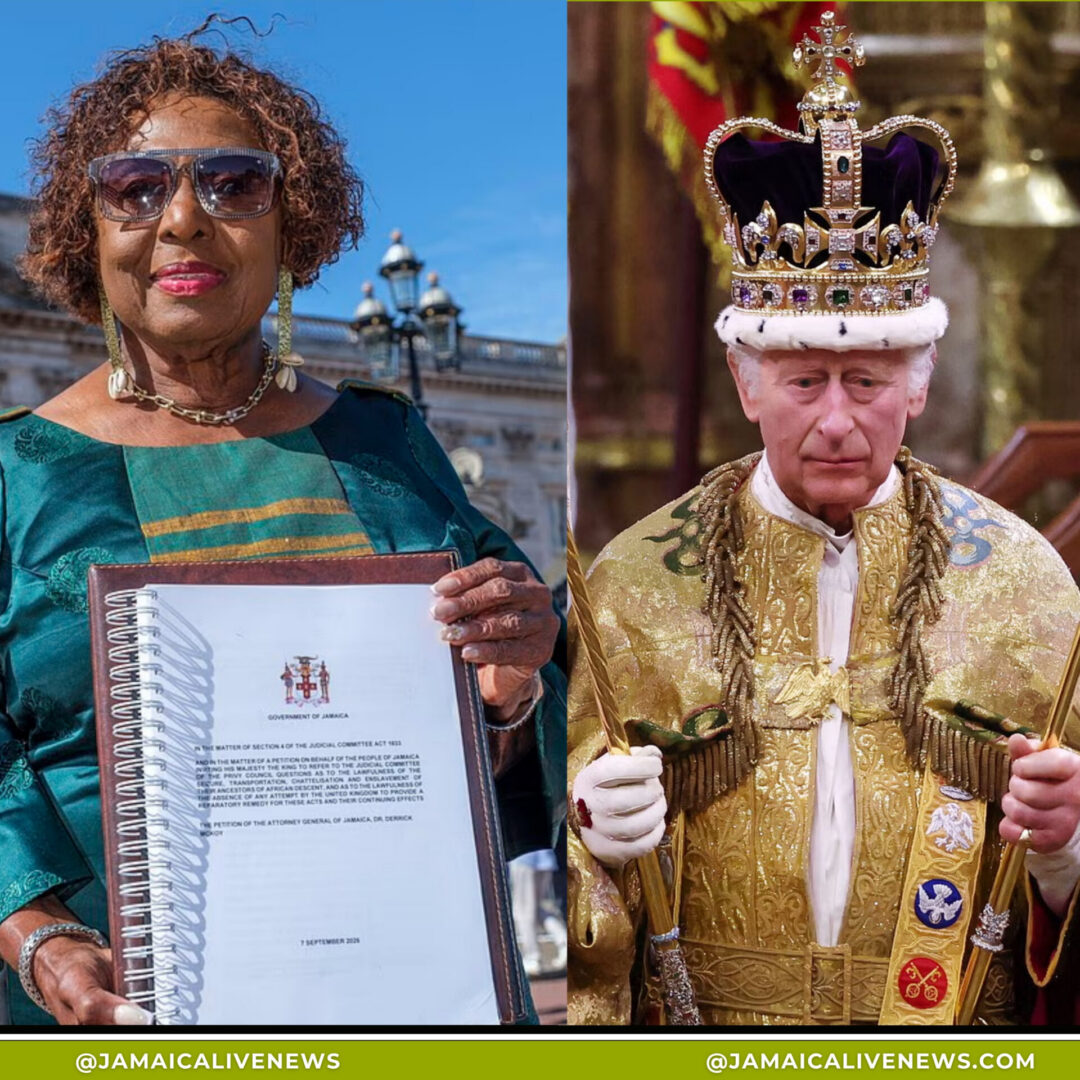
The move represents a significant escalation in Jamaica’s long-running campaign for reparatory justice and could potentially force one of the most consequential legal examinations yet of Britain’s role in the enslavement of Africans in Jamaica.
Importantly, Jamaica is not asking King Charles to write a cheque or directly award financial compensation.
Instead, the petition seeks legal answers.
At the heart of Jamaica’s strategy is a question that has hovered over the reparations debate for generations: Was the forced transportation and enslavement of Africans in Jamaica lawful in the first place — and if it was not, what obligation does Britain have today to repair the consequences?
The Three Questions Jamaica Wants Answered
The petition asks King Charles to refer three questions to the Judicial Committee of the Privy Council.
In substance, Jamaica wants the court to determine:
- Whether the forced transportation of Africans from their homelands to Jamaica and their subsequent enslavement were lawful under the fundamental principles of English common law.
- Whether the forced transportation and enslavement of Africans constituted crimes against humanity under international law for which Britain bears responsibility.
- Whether Britain consequently has an obligation to provide a remedy to the Jamaican people for the unlawful transportation and enslavement of Africans under British rule and for the continuing consequences of that system.
It is an unusual legal strategy — one designed to move the reparations debate beyond political arguments over whether Britain should apologise or pay compensation and towards the underlying question of legal responsibility.
Grange described the approach as the product of years of deliberation.
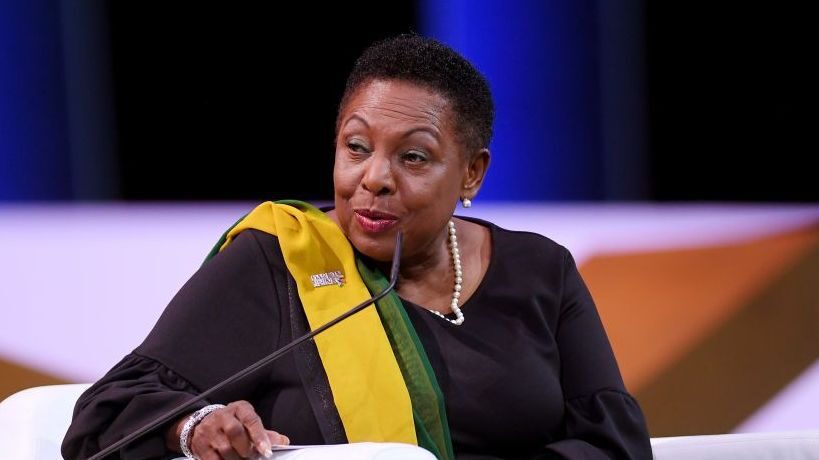
“This novel legal approach is being taken after years of deliberations and is intended to ensure the long outstanding settlement for the hundreds of years of the most horrific abuse that our African ancestors endured — the gravest crime against humanity,” the minister said.
Jamaica Says Slavery Is Not Simply History
Speaking in London, Grange argued that the consequences of slavery did not disappear with emancipation.
She said Jamaica continues to struggle with economic and social structures inherited from slavery and colonialism, pointing particularly to education, healthcare and broader patterns of development.
“We have inherited systems that continue to deprive our country and our people,” Grange told The Guardian.
Her argument goes directly to one of the central principles of the Caribbean reparations movement: reparations are not simply about compensating people today for suffering experienced by their ancestors centuries ago.
The argument is that colonial slavery created enormous wealth for European powers while leaving formerly enslaved societies with deeply unequal economic and social structures whose consequences continued long after emancipation.
Jamaica’s petition therefore attempts to establish whether there is a legal obligation to address not only the original acts of enslavement, but their continuing consequences.
The Zong: Jamaica Remembers One of the Horrors of the Slave Trade
The delegation’s visit also coincides with the anniversary of the voyage of the infamous Zong, one of the most notorious atrocities associated with the transatlantic slave trade.
On September 6, 1781, the slave ship Zong sailed from the West African coast towards Jamaica carrying hundreds of captive Africans.
During the voyage, enslaved Africans were deliberately thrown overboard and killed. The killings later became the subject of an insurance dispute in Britain because the enslaved Africans had been treated under the commercial system as property and cargo.
For Jamaica, the Zong has become a powerful symbol of the brutality and dehumanisation at the centre of the slave economy.
Grange was scheduled to participate Sunday in an ecumenical service at New Park Road Baptist Church in South London focusing on remembrance, justice and repair, and to lay a floral tribute in honour of the victims.
“We cannot forget the victims and the survivors who made it to Jamaica,” Grange said, describing the killings aboard the Zong as representative of the horrors inflicted upon Africans during the slave trade.
Britain Compensated Slave Owners
One of the most contentious historical realities surrounding the reparations debate is what happened when slavery was abolished.
Britain compensated slave owners for the loss of the people they had legally regarded as property.
The formerly enslaved received no comparable compensation.
Grange previously highlighted this history when announcing Jamaica’s plans, noting that Britain provided £20 million to compensate slave owners following abolition and that the financing associated with that compensation was not finally settled until 2015.
For reparations advocates, this history creates a profound moral contradiction: the system recognised financial losses suffered by enslavers while the people who had endured generations of forced labour, violence and dispossession received no compensation for what had been done to them.
Jamaica Also Wants Its Artefacts Back
The delegation’s mission extends beyond the reparations petition.
Grange is also expected to engage the British Museum as Jamaica continues efforts to secure the return of cultural artefacts removed from the island during the colonial period.
The minister argues that these objects form part of Jamaica’s national inheritance.
“They are priceless, they are significant to the story of Jamaica, they belong to the people of Jamaica and we are working to bring them home,” she said.
The issue of cultural repatriation has become an increasingly important part of the wider international debate surrounding colonialism, with countries across Africa, Asia and the Caribbean demanding the return of cultural and historical objects removed during European colonial rule.
A Caribbean Movement, Not Jamaica Alone
Jamaica’s action is also part of a much wider Caribbean and international reparations campaign.
Former St Vincent and the Grenadines Prime Minister Ralph Gonsalves, a prominent figure in the regional reparations movement, said the present cannot be separated from the historical underdevelopment created by Indigenous genocide and African enslavement.
European nations, he argued, accumulated wealth through the exploitation of enslaved African people.
The Jamaican petition comes amid growing international pressure for former colonial powers to engage seriously with reparatory justice.
Regional advocacy is expected to continue through a Caribbean reparations conference in Barbados later this month, activity surrounding the United Nations General Assembly and discussions connected to the Commonwealth Heads of Government Meeting scheduled for Antigua in November.
The Question Now Moves to the King
Jamaica’s approach places King Charles in a particularly unusual position.
The petition is being presented to him not simply as the British monarch, but specifically as King of Jamaica and Jamaica’s constitutional Head of State.
That distinction is central to the Government’s strategy.
Rather than approaching Britain merely as a former colony asking its former colonial ruler for compensation, Jamaica is asking its own Head of State to facilitate consideration of legal questions concerning what was done to the Jamaican people under British rule.
What happens after the petition is filed could therefore have implications far beyond Jamaica.
A legal opinion addressing Britain’s responsibility for slavery and its continuing consequences could influence reparations campaigns throughout the Caribbean and potentially across the wider African diaspora.
The British Government has historically resisted paying slavery reparations. Jamaica, however, is now attempting to move the issue onto different terrain — away from whether Britain voluntarily wants to pay reparations and towards whether there may be a legal obligation to provide a remedy.
More than 180 years after full emancipation in Jamaica, the country is effectively asking Britain to confront three questions that strike at the foundations of its colonial history:
Was it lawful?
Was it a crime against humanity?
And if a historic wrong continues to produce consequences, is there a legal duty to repair it?
On Monday, Jamaica intends to formally put those questions before its King.
Jamaica Live — Your trusted news source both locally and internationally.