

Florida Congressman Carlos Giménez Praises Jamaica’s Move to End Cuba Medical Programme After Earlier Threats
Jamaica Live News Desk– | Mar 6, 2026
Meanwhile, Jamaica is now grappling with the impact of ending the Cuban medical programme, which for decades supplied doctors and nurses to support the island’s healthcare system.
KINGSTON, Jamaica — Florida Republican congressman Carlos A. Giménez has once again ignited debate across the Caribbean after praising Jamaica’s decision to end its decades-long medical cooperation programme with Cuba—just weeks after warning that the country could “face the consequences” over its stance on the island.
Taking to social media following the announcement, Giménez applauded Jamaica for discontinuing the programme and accused the Cuban government of operating what he described as a “criminal human trafficking operation.”
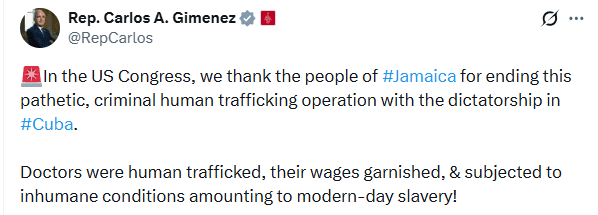
“In the U.S. Congress, we thank the people of Jamaica for ending this pathetic, criminal human trafficking operation with the dictatorship in Cuba,” the congressman wrote. “Doctors were human trafficked, their wages garnished, and subjected to inhumane conditions amounting to modern-day slavery.”
Giménez’s comments come after he previously drew backlash for sharply criticizing remarks made by Jamaica’s Prime Minister Andrew Holness during regional discussions on Cuba.
“I harshly condemn this and find it lamentable that the JLP would cover up for the moribund dictatorship in Cuba, when the Castro regime repeatedly intervened in Jamaica’s politics to exacerbate partisan tensions and undermine the JLP,” Giménez wrote at the time. “Jamaica will face the consequences.”
Holness, speaking during discussions among leaders of the CARICOM, had called for constructive dialogue between the United States and Cuba while reaffirming Jamaica’s support for democratic values and human rights.
The Jamaican prime minister warned that instability in Cuba could trigger wider migration, security, and economic challenges across the Caribbean region, urging a balanced and pragmatic diplomatic approach.
Meanwhile, Jamaica is now grappling with the impact of ending the Cuban medical programme, which for decades supplied doctors and nurses to support the island’s healthcare system.
Opposition Spokesman on Health Dr. Alfred Dawes has raised concerns about the potential fallout from the departure of Cuban medical personnel, questioning whether the Ministry of Health conducted a proper gap analysis to assess the impact on Jamaica’s public health system.
Dawes pointed in particular to the Cuban-supported eye-care programme, noting that it performs more cataract surgeries than all public hospitals combined and serves thousands of Jamaicans who cannot afford private treatment. He warned that without the programme, many patients could face paying as much as $500,000 for cataract surgery in the private sector.
The opposition spokesman also pressed the government on how it intends to fill positions in underserved communities where Cuban doctors have historically worked. According to Dawes, these posts in rural clinics, community health centres, and some hospitals are often difficult to staff locally due to social and professional factors, leaving the system heavily reliant on Cuban personnel.
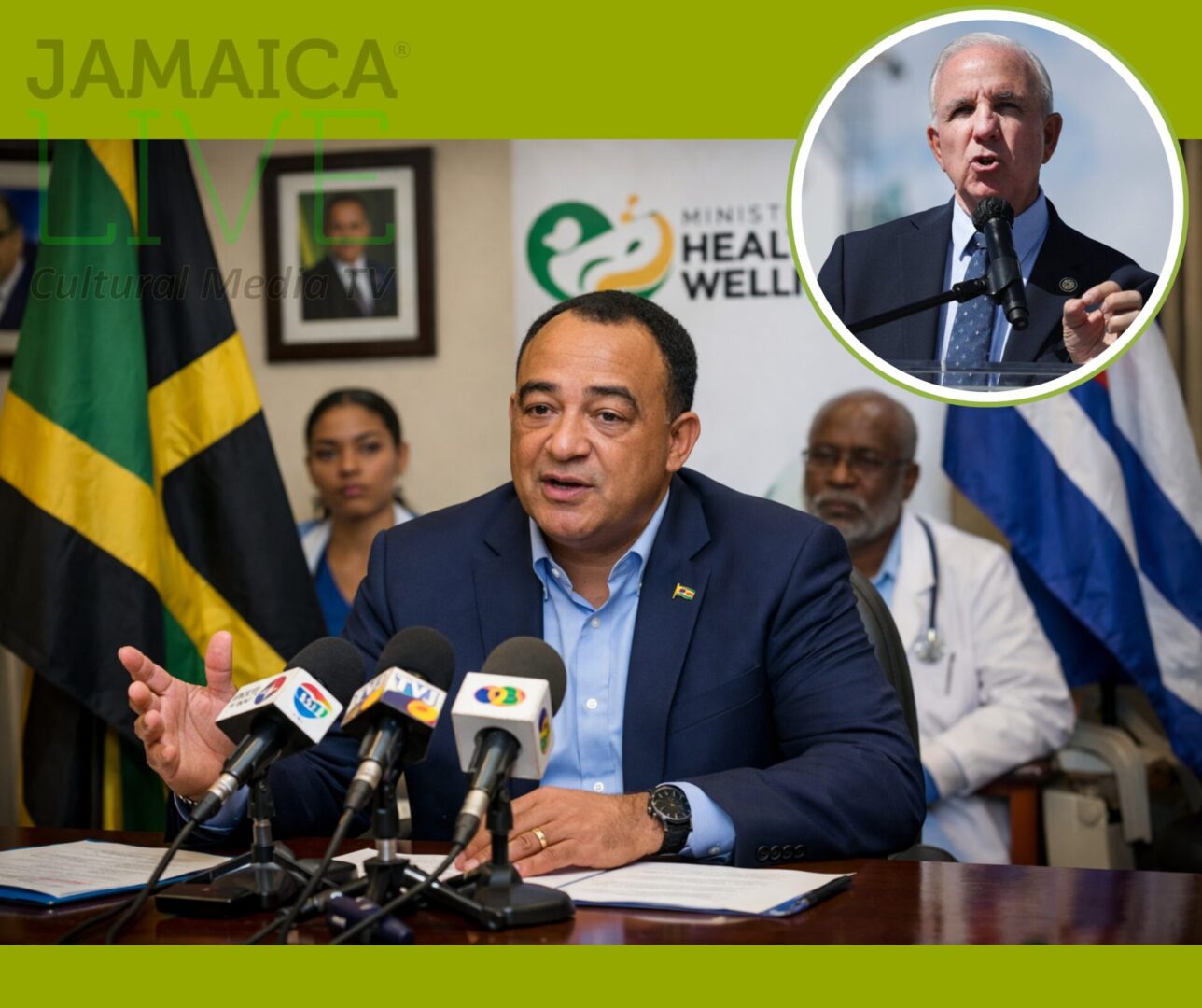
Health Minister Christopher Tufton said the government is moving quickly to address the resulting gaps.
“We are not sitting down and not doing anything,” Tufton said, outlining what he described as a “multipronged approach” to tackling the shortage of healthcare workers in several areas of the public health system.
For many years, Cuban medical professionals played a critical role in Jamaica’s hospitals and clinics, particularly in underserved rural communities.
To address the potential shortfall, Tufton said the ministry is ramping up training and recruitment initiatives aimed at strengthening Jamaica’s healthcare workforce. He explained that the government has introduced scholarship programmes with bonding requirements, along with measures to improve staff retention through better working conditions and compensation, while also expanding overseas recruitment efforts.
According to the minister, more than 100 trainees in specialised medical fields are expected to enter the public health system later this year.
The ministry is also exploring recruitment partnerships with countries such as Ghana, the Philippines, Nigeria, and India to bring in healthcare professionals, including medical educators. In addition, a diaspora recruitment drive has already received 136 expressions of interest from Jamaicans living abroad who are willing to return and serve in the local health sector.
The end of the programme has therefore sparked wider debate about whether Jamaica’s decision reflects growing geopolitical pressure from Washington on Caribbean nations over their relationships with Havana.
Observers say the situation highlights the delicate balancing act Caribbean governments face as they attempt to maintain long-standing regional partnerships while navigating the influence of larger global powers.
For Jamaica, the episode has reopened questions about sovereignty, diplomacy, and how small island states manage foreign policy decisions in an increasingly polarized international landscape.