

Ask for Justice, Get Locked Out: UK Party Targets Countries Over Reparations
Jamaica Live News Desk– | April 10, 2026
Reform UK’s proposal to block visas over slavery reparations ignites outrage across the Caribbean, raising deeper questions about Britain’s historical accountability.
A political firestorm is brewing across the Atlantic after Britain’s right-wing Reform UK party declared that it would deny visas to nationals from countries pursuing slavery reparations—if it forms the next government. The proposal, led by party figure Nigel Farage and backed by home affairs spokesman Zia Yusuf, would target countries like Jamaica, Barbados, Nigeria, and Ghana—nations actively pushing for reparatory justice over the transatlantic slave trade.
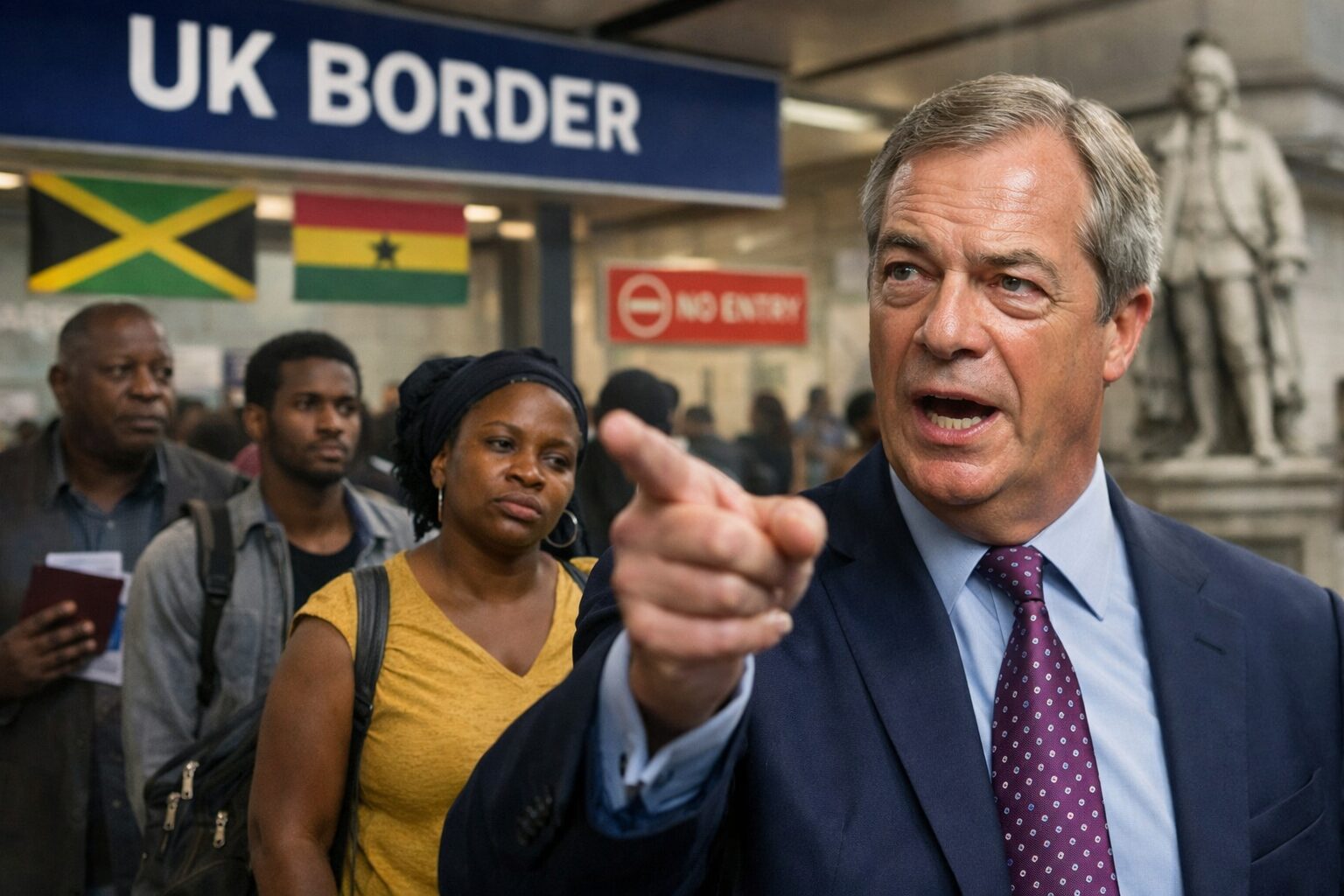
Under the policy, any country that formally demands reparations—whether through UN motions, legal claims, or national committees—could see its citizens blocked from entering the UK entirely, including for work, study, or tourism.
The announcement has been met with sharp criticism, particularly from the Caribbean, where the scars of slavery remain deeply embedded in society.
Britain transported an estimated more then 12.5 million Africans across the Atlantic, building vast wealth from what is widely acknowledged as one of history’s most brutal systems of exploitation. Yet, despite this legacy, successive UK governments have refused to engage meaningfully with reparations.
Now, critics say Reform UK’s proposal goes even further—weaponizing immigration policy to silence calls for justice.
“Huge Sacrifice?” — A Narrative Under Fire
Zia Yusuf defended the policy by claiming that countries seeking reparations “ignore the fact that Britain made huge sacrifices to be the first major power to outlaw slavery.”
But that argument is being torn apart.
To suggest Britain made a “huge sacrifice” by ending slavery—after profiting from centuries of inhumane exploitation, forced labor, and generational trauma inflicted on Black people—is being described by many as not just misleading, but offensive.
Ending slavery was not a charitable act. It was the overdue dismantling of a system Britain helped build, expand, and profit from on a global scale.
The controversy comes just weeks after a landmark vote at the United Nations.
On March 25, 2026, the UN General Assembly adopted a Ghana-led resolution declaring the transatlantic slave trade the “gravest crime against humanity.” The resolution, backed by 123 countries, calls for reparatory justice as a necessary step toward addressing historical wrongs.
While the United States, Israel, and Argentina voted against the resolution, Britain chose to abstain—a move that has only deepened skepticism about its willingness to confront its past.
- The Vote: 123 countries voted in favor, with 52 abstentions (including the UK, EU nations, and Canada) and three against (USA, Israel, Argentina).
- UK’s Stance: The UK argued that while it recognizes the horrific nature of the slave trade, it opposes creating a “hierarchy” of crimes.
CARICOM’s Longstanding Demand
For over a decade, the Caribbean Community (CARICOM) has been pushing a structured 10-point plan for reparations. The demands go beyond money, calling for:
- A full formal apology from former colonial powers
- Debt cancellation
- Investment in public health and education
- Programs to address the lasting psychological and economic damage of slavery
These are not abstract demands—they are rooted in the ongoing inequalities that trace directly back to colonial exploitation.
Reform UK’s proposal is being seen not just as political posturing, but as a dangerous escalation.
If implemented, it could strain diplomatic ties, disrupt migration flows, and deepen the divide between Britain and nations it once colonized.
But more than that, it sends a chilling message:
Ask for justice—and risk being shut out.
At its core, this controversy forces a larger, uncomfortable question:
Can a nation truly claim moral authority on human rights while refusing to reckon with the wealth and power built on centuries of exploitation?
For many in the Caribbean and across Africa, the answer is becoming clearer.
And louder.