

ODPEM: Looking Beyond the Headlines — The Auditor General’s Findings, Government Reforms and the Way Forward
JAMAICA LIVE SPECIAL REPORT | NOVEMBER 2026
By Jamaica Live News
The latest Auditor General’s report into the management of Hurricane Melissa relief supplies has raised serious questions about accountability at Jamaica’s Office of Disaster Preparedness and Emergency Management (ODPEM). However, a closer examination of the Government’s disaster-response operations reveals a much broader story stretching back to Hurricane Beryl in July 2024.
The findings involve unspent hurricane donations, weaknesses in financial management, deficiencies in inventory records, unauthorised expenditure, questions surrounding the distribution of relief supplies and longstanding institutional problems that successive audits have identified.
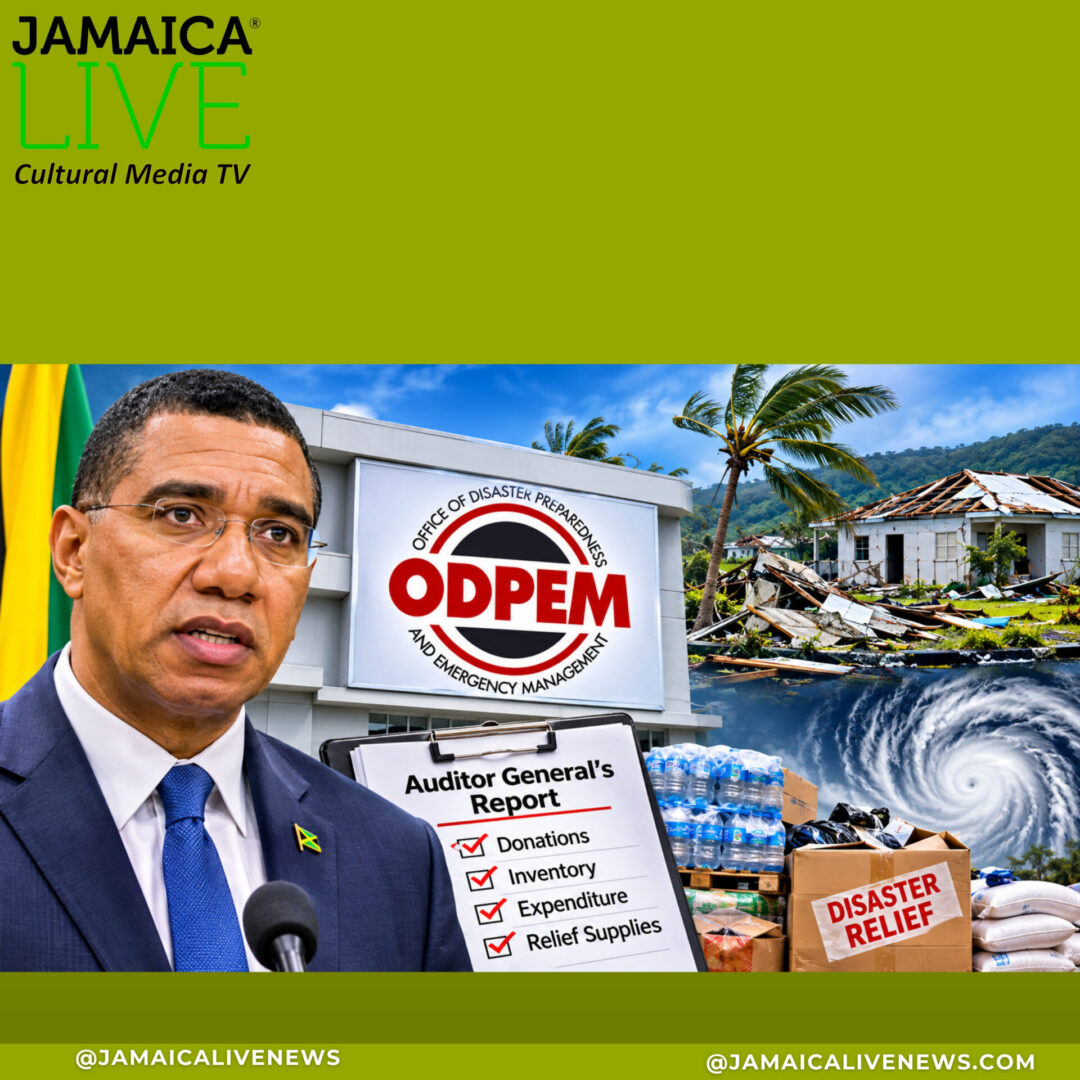
Yet the official record also reveals that the Government had begun examining ODPEM’s operations, commissioning reviews, introducing leadership changes and developing technological reforms before the latest findings were made public.
For Jamaica Live, understanding the full situation requires examining both sides of that record: the failures identified by independent auditors and the actions taken by the Government to address them.
This special report traces the developments from Hurricane Beryl in 2024 through Hurricane Melissa in 2025, the financial audit published in May 2026 and the latest compliance audit tabled in Parliament on November 17, 2026.
Hurricane Beryl in July 2024: The Early Warning Signs
Hurricane Beryl passed close to Jamaica in July 2024, damaging homes, infrastructure, agricultural lands and public facilities, particularly in southern and western sections of the island.
Although Jamaica avoided the full destructive potential of the hurricane, the response exposed weaknesses in the country’s disaster-preparedness arrangements.
Prime Minister Andrew Holness subsequently acknowledged that his observations of ODPEM, the security forces, municipal corporations and other agencies had raised concerns about the country’s ability to manage a more severe disaster.
The Government commissioned an independent organisational review of ODPEM to examine its institutional capacity, leadership, staffing, coordination, operating systems and accountability arrangements.
The review, whose findings were received in 2025, identified areas requiring substantial improvement. Recommendations included strengthening leadership, upgrading staffing arrangements, improving coordination with other agencies and modernising digital, inventory and geographic information systems.
The significance of this review is that the Government had recognised ODPEM’s institutional weaknesses before Hurricane Melissa struck Jamaica in October 2025.
However, recognising deficiencies and completing the reforms necessary to correct them are two separate matters.
September 2024: Government Establishes Disaster Risk Management Review Committee
On September 10, 2024, the Holness administration established the Disaster Risk Management Review Committee, chaired by former Commissioner of Police Major General Antony Anderson.
The committee was established to examine Jamaica’s national disaster-risk management framework, including emergency coordination, infrastructure resilience, communication systems, preparedness and the capacity of public institutions to respond effectively.
Its work formed part of a wider effort to identify weaknesses in the country’s disaster-management arrangements and recommend improvements.
Separately, the Auditor General’s Department published a performance audit in December 2024 examining ODPEM’s operations over earlier financial years.
That audit raised concerns about aspects of the agency’s preparedness, management and operational effectiveness.
These were distinct exercises: an organisational review commissioned by the Government, a national disaster-risk management review and an independent performance audit.
Together, they provided further evidence that Jamaica’s disaster-management system required institutional strengthening.
The Unspent Hurricane Beryl Donations: A Financial Warning That Continued Into 2026
One of the most significant findings concerning Hurricane Beryl emerged nearly two years after the storm.
In a financial-management audit tabled in Parliament on May 12, 2026, Auditor General Pamela Monroe Ellis disclosed that ODPEM continued to hold substantial unspent donations originally received for Hurricane Beryl relief.
As at October 28, 2025, when Hurricane Melissa struck Jamaica, the outstanding Beryl donation balances included approximately J$138.8 million and US$101,974.
These were funds remaining from the earlier disaster, before the Government began receiving donations for Hurricane Melissa.
The Auditor General also found that ODPEM had not supplied adequate information showing the total donations collected and expenditure incurred for Hurricane Beryl.
Without that information, auditors could not determine whether the remaining funds had been reserved for legitimate ongoing programmes or whether the balances reflected delays and weaknesses in the planning and implementation of relief activities.
This distinction is important. The audit did not establish that the Beryl donations had been stolen or disappeared. Rather, it identified significant unspent balances and insufficient financial information to explain their utilisation.
The finding raised a broader question about the management of disaster donations across successive emergencies.
If money donated for one hurricane remained unused when another major disaster struck, the Government needed reliable systems to establish how much was available, what restrictions applied, what programmes remained outstanding and how the funds could lawfully be deployed.
The Auditor General considered the Beryl balances evidence of weaknesses in the planning, monitoring and utilisation of donated funds across disaster-response cycles.
October 2025: Hurricane Melissa Places the System Under Extraordinary Pressure
On October 28, 2025, Category 5 Hurricane Melissa struck Jamaica, causing widespread devastation, particularly across western parishes.
Homes were destroyed, roads and public infrastructure were damaged, communities became isolated and thousands of Jamaicans required emergency assistance.
The scale of the disaster generated an extraordinary humanitarian response.
Relief supplies arrived from international governments, humanitarian organisations, charitable institutions, private donors and Jamaicans at home and abroad.
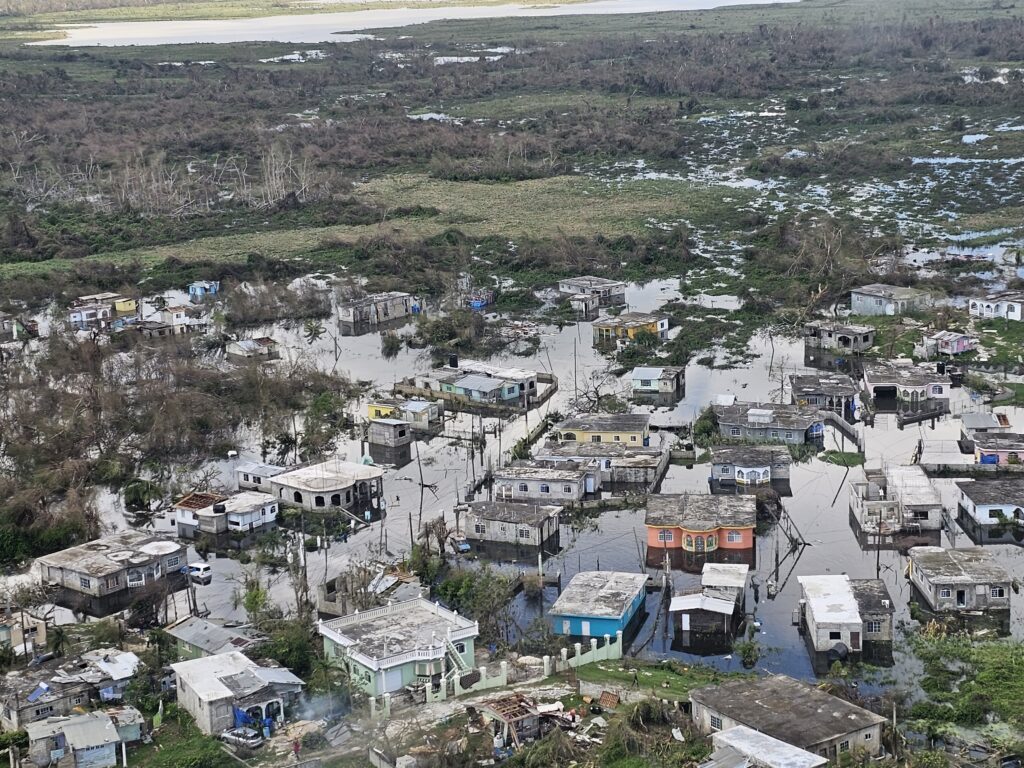
These donations included food, clothing, building materials, household supplies, emergency equipment and prefabricated housing units.
ODPEM, as the country’s central disaster-response agency, faced the enormous task of coordinating the receipt, storage, documentation and distribution of relief supplies while supporting emergency operations across affected communities.
The volume of donations placed significant pressure on the agency’s existing warehouse facilities, staffing and record-keeping systems.
The Auditor General subsequently acknowledged the exceptional conditions under which ODPEM operated. However, the department maintained that the scale of the emergency increased the need for effective controls rather than removing the obligation to account for public and donated resources.
November 2025: Prime Minister Transfers ODPEM to the Office of the Prime Minister
On November 4, 2025, approximately one week after Hurricane Melissa struck Jamaica, Prime Minister Andrew Holness transferred ODPEM from the Ministry of Local Government and Community Development to the Office of the Prime Minister.
Jamaica Defence Force Commander Alvin Gayle was appointed Director General.
The intervention was intended to strengthen leadership, improve operational coordination and accelerate the restructuring of the agency.
Holness subsequently explained that the decision built on concerns identified following Hurricane Beryl, including weaknesses in ODPEM’s leadership, staffing, mission, systems and accountability arrangements.
The Government also sought to improve cooperation between ODPEM, the Jamaica Defence Force and other agencies involved in the national relief effort.
The transfer was an important administrative intervention, but it did not immediately resolve the agency’s longstanding weaknesses.
Those deficiencies became increasingly apparent as the Auditor General examined the management of Hurricane Melissa donations and recovery programmes.
May 2026 Audit: J$1.44 Billion in Melissa Cash Donations, but Only 1.8 Per Cent Spent
The Auditor General’s financial-management audit, tabled in Parliament on May 12, 2026, revealed that ODPEM had received approximately J$1.44 billion in cash donations for Hurricane Melissa as at February 23, 2026.
The amount comprised Jamaican-dollar and US-dollar contributions received through the Support Jamaica initiative and direct donations.
However, the audit found that only approximately J$26.2 million, or 1.8 per cent, had been spent by that date.
This meant that nearly four months after Hurricane Melissa, the overwhelming majority of the cash donations recorded by ODPEM had not been utilised.
In its April 2026 response, ODPEM explained that the low expenditure rate resulted from the absence of authorisation from the Ministry of Finance and the Public Service to spend the funds.
That explanation is important because it indicates that the delay was not necessarily caused by ODPEM refusing to distribute assistance or by funds being unavailable.
It raises a separate administrative question concerning the approval processes governing the use of disaster donations.
The Auditor General nevertheless identified weaknesses in financial planning, oversight and the timely utilisation of donated resources.
The report also recorded approximately J$569.6 million and US$5.9 million in hurricane donation accounts as at February 23, 2026, including balances associated with Hurricane Beryl.
These figures describe the financial position at the audit date. They should not be interpreted as the amounts still held in November 2026 without updated account statements.
The findings demonstrate why effective disaster response requires not only fundraising and the receipt of donations, but also timely expenditure authorisation, proper accounting and clearly defined procedures for releasing assistance to affected communities.
Questions Over Donations Processed Through the Support Jamaica Platform
The May 2026 audit also examined the handling of donations processed through a private financial-services institution associated with the Government’s Support Jamaica fundraising initiative.
Auditors found that the institution had proposed retaining 30 per cent of net donations for 45 days to cover potential bank chargebacks or refunds.
However, ODPEM did not have a formal written agreement governing the arrangement.
The audit also identified delays in transferring retained donations, including amounts exceeding J$15 million and US$298,000 that remained outstanding beyond the proposed transfer deadlines during the period examined.
The Auditor General reported that supporting bank documentation had not been provided to independently confirm whether certain delayed transfers were subsequently completed.
These findings did not establish that the money had been stolen. They highlighted weaknesses in contractual arrangements, financial oversight and the documentation required to verify the movement of donations.
The issue is particularly important because fundraising platforms depend on public trust.
Donors must be able to establish that their contributions have been received, properly transferred, recorded and ultimately used for their intended purposes.
Roof Restoration Programme: Repairs Reported, but Documentation Incomplete
The May audit also examined the Government-directed Roof Restoration Programme established to assist households whose roofs had been damaged or destroyed by Hurricane Melissa.
ODPEM reported that 421 roofs had been repaired through the programme, which involved the Jamaica Defence Force and international military support personnel.
However, the Auditor General identified deficiencies in the documentation supporting beneficiary selection, damage assessments, material deliveries and completion of repairs.
Of approximately J$122.5 million in roofing materials delivered to Jamaica Defence Force locations, only about J$88.6 million was supported by formal acknowledgements of receipt.
The remaining J$34 million lacked the signed delivery documentation required for auditors to verify that the materials had been properly received.
This does not establish that J$34 million in materials was stolen or never delivered. It means the available records were insufficient to independently verify the transactions.
The audit also identified weaknesses in procurement controls involving contracts valued at approximately J$167.3 million.
Although emergency procurement procedures allowed certain expedited purchasing arrangements, auditors found deficiencies in verifying suppliers’ registration and tax-compliance status.
The wider concern was that disaster recovery programmes needed clearer beneficiary records, procurement documentation and verification procedures to demonstrate that assistance reached the intended households.
National Disaster Fund: Governance and Reporting Deficiencies
Another significant finding concerned the National Disaster Fund, which operates under Jamaica’s disaster-risk management legislation.
The Auditor General found that required financial statements and annual reports had not been prepared for the 2023–2024 and 2024–2025 financial years.
The audit linked these deficiencies to the absence of a functioning fund committee and appointed chairman.
It also found that the fund lacked a dedicated bank account, with transactions being mixed with those associated with a separate emergency communications project supported by the Japan International Cooperation Agency.
As at February 23, 2026, the National Disaster Fund reportedly held approximately J$163 million in bank balances and J$293 million in investments.
The existence of these balances was not itself evidence of wrongdoing.
The concern was the absence of the financial reporting and governance arrangements necessary to provide independent oversight of the fund.
These findings added to the evidence that Jamaica’s disaster-management challenges extended beyond warehouse operations to financial administration and institutional governance.
June 2026: GeoConnect Introduced to Improve Beneficiary Verification and Relief Coordination
Among the Government’s most significant reforms was the introduction of technology designed to improve the identification of affected households and coordination of relief assistance.
On June 2, 2026, participating government agencies formalised a data-sharing arrangement supporting GeoConnect, a system designed to improve the collection, sharing and verification of beneficiary information.

The platform enables authorised agencies to cross-reference information on households, damage assessments, geographic locations and assistance already received.
This is intended to reduce duplication, identify households that may have been overlooked and strengthen the accuracy of relief distribution.
For example, where several government programmes are providing assistance to the same community, shared information can help officials determine which households have already received support and which still require intervention.
The Government is also developing a broader geospatial framework to map communities, roads, buildings, businesses, public facilities and emergency resources.
Such technology can assist disaster-response teams in identifying affected areas, assessing access routes and coordinating the movement of supplies.
It is particularly relevant to Jamaica’s rural and remote communities, where damaged roads, informal settlements and incomplete address information can complicate relief operations.
However, an important distinction must be maintained: GeoConnect had become operational, while other components of the wider national geospatial and logistics infrastructure remained under development.
The reform represents progress, but its long-term effectiveness will depend on implementation, accurate data, inter-agency cooperation and consistent use.
Staffing, Warehouse Management and Inventory Reforms
Following the transfer of ODPEM to the Office of the Prime Minister, the agency began reviewing its staffing arrangements and strengthening operational oversight.
Changes included adjustments to management responsibilities, improvements in logistics supervision and measures to strengthen the documentation of incoming and outgoing relief supplies.
ODPEM reported that its Logistics Department had been placed under closer supervision and that procedures for recording donations, issuing supplies, maintaining inventory registers and conducting stock checks were being improved.
The agency also began upgrading its accounting and inventory systems to reduce reliance on manual records.
Additional staff appointments and training were identified as necessary to address longstanding capacity deficiencies.
These measures are relevant because they demonstrate that corrective action was underway before the November 2026 compliance audit was tabled.
Nevertheless, the subsequent findings showed that the reforms had not yet eliminated serious weaknesses in the agency’s ability to account for donated supplies.
November 2026 Audit: J$6.3 Billion in Donated Relief Goods Under Scrutiny
The Auditor General’s latest compliance audit, dated October 29, 2026, and tabled in Parliament on November 17, examined the management and distribution of physical relief supplies received following Hurricane Melissa. The report revealed significant weaknesses in ODPEM’s inventory records, donation schedules, valuation procedures and documentation of goods transferred to other organisations.
One of the most widely discussed figures was approximately J$6.3 billion in donated relief goods.
It is essential to explain that this figure represented the estimated value of physical donations, not J$6.3 billion in missing cash.
According to ODPEM’s July 2026 figures, approximately J$1.5 billion in goods was classified as intended for the Government, while approximately J$4.8 billion was classified as donations intended for third-party organisations, including charities and other relief initiatives.
The Auditor General found that ODPEM had not provided sufficient evidence to substantiate the valuations or verify the transfer of all the third-party consignments to their intended recipients.
This was a serious accountability deficiency.
However, the absence of sufficient transfer documentation is not, by itself, proof that all the goods were stolen or never delivered.
The audit established that ODPEM could not adequately demonstrate what had been received, where all the goods had gone and whether the consignments had been distributed in accordance with donor instructions.
J$780 Million in Donated Goods Omitted From Records
The compliance audit also identified donated supplies valued at approximately J$780 million that had not been properly captured in ODPEM’s official donation schedules.
Auditors additionally found unopened containers and other unrecorded items during warehouse inspections.
The deficiencies raised questions about the completeness of the agency’s inventory records and the accuracy of the reported J$6.3 billion total.
The Auditor General also identified discrepancies involving building materials intended for roof repairs.
Information supplied by the Office of the Prime Minister referred to approximately J$400 million in building materials, while ODPEM’s records reflected a substantially lower amount.
Auditors sought supporting documents to reconcile the figures and verify the receipt, custody and distribution of the materials.
The requested information was not adequately supplied during the audit.
The problem, therefore, was not simply the presence of different figures. It was the inability of the existing accounting and inventory systems to reconcile those figures through reliable documentation.
J$45.1 Million Used for Customs Clearance: The Government’s Explanation and the Auditor General’s Objection
Another major finding concerned the use of approximately J$45.1 million in restricted cash donations that had been designated for roof repairs and foundations for semi-permanent housing.
Instead, the funds were used to pay customs clearance, brokerage, warehousing and related expenses associated with incoming hurricane relief shipments.
Of that amount, approximately J$33 million was used to clear goods intended for third-party organisations rather than the Government.
ODPEM explained that the expenditure was undertaken in the context of an urgent humanitarian operation.
Large quantities of donated supplies had arrived at Jamaica’s ports, and clearance costs needed to be addressed to prevent goods from remaining at the wharf, accumulating additional charges and delaying assistance.
Prime Minister Holness subsequently suggested that ODPEM’s management may have considered the expenditure necessary to release urgently needed supplies.
However, the Auditor General found that the use of restricted donations fell outside their approved purpose and that ODPEM had not provided the required authority for the expenditure.
Both elements are important.
The operational explanation provides context for why the decision may have been taken. The audit finding establishes that the necessary financial authorisation and controls were not demonstrated.
Holness stated that the decision was taken at ODPEM’s management level rather than by the political executive.
ODPEM accepted the recommendation to restore the J$45.1 million to the donation account.
The audit set a deadline of March 31, 2027, for reimbursement and recovery. Subsequent statements indicated that funding arrangements for reimbursement had been approved, although the public information examined did not establish that the full transfer had been completed.
The finding therefore concerns the unauthorised use of restricted funds, not an audit determination that the money had been stolen.
Damaged Food Supplies: Weevil-Infested Rice and Expired Crackers
The November audit also identified problems involving donated food supplies held in ODPEM’s warehouses.
Auditors found 204 bags of rice affected by weevil infestation and 359 boxes of crackers that had passed their best-before dates.
The findings raised concerns about warehouse supervision, stock rotation, storage conditions and the timely distribution of donated food.
Holness acknowledged the need for proper inventory-management procedures, including a first-in, first-out system that prioritises the distribution of older supplies.
He also pointed out that some donated goods may arrive close to their expiry dates, creating additional challenges for emergency-response agencies handling large volumes of supplies.
ODPEM reported that fumigation had been undertaken and that stock-management procedures were being strengthened.
While these explanations provide context, the findings demonstrate the importance of effective inspection, storage and distribution procedures.
Food donations that cannot be safely distributed represent a loss of potentially valuable humanitarian assistance, regardless of whether the deterioration resulted from poor storage, delayed distribution or the condition of the goods when received.
Questions Over 200 Prefabricated Houses Donated by China
The audit also raised questions about documentation relating to 200 prefabricated housing units donated by China.
The Auditor General found that the records made available were insufficient to establish the custody and distribution of all the units.
Prime Minister Holness challenged the impression that the houses could not be located, arguing that information about their transfer and storage was available.
ODPEM subsequently reported that 169 units had been distributed or transferred and that 31 remained in its custody.
Holness also indicated that responsibility for developing the housing solutions had been transferred to the relevant government ministry.
This dispute illustrates the distinction between an asset being physically missing and an agency failing to provide auditors with adequate documentation showing where that asset is located.
The Government’s subsequent explanation addresses the reported whereabouts of the houses. The separate question is whether the original inventory and transfer records met the standards required for independent verification.
Internal Inquiry and MOCA Investigation
The concerns surrounding ODPEM’s inventory management were serious enough to trigger an internal investigation before the November audit became public.
ODPEM convened an internal inquiry in July 2026 to examine inconsistencies in its inventory records and the management of donated relief supplies.
Following that inquiry, the matter was referred to an external investigative authority in September 2026.
The Major Organised Crime and Anti-Corruption Agency (MOCA) subsequently became involved.
Several ODPEM employees have since resigned, but Holness has indicated that the investigation will continue.
The purpose of the investigation is to determine whether the irregularities resulted from administrative failures, negligence, misconduct or criminal wrongdoing.
At this stage, it is important not to treat an investigation as proof of criminal conduct.
The Auditor General identified significant weaknesses in accountability and internal controls. MOCA’s role is to determine whether the evidence supports further action under the law.
The outcome will be an important part of establishing responsibility for any misconduct uncovered.
Government Moves to Accelerate Institutional Restructuring
Following publication of the November audit, Holness announced that the Government would move to accelerate the restructuring of ODPEM.
The proposed measures include strengthening leadership, improving staff capacity, reviewing remuneration arrangements and establishing more effective accountability and management systems.
Holness has argued that disaster-management institutions require suitably qualified personnel, modern technology and operational structures capable of functioning under extraordinary pressure.
The Government has also discussed transforming ODPEM into a broader National Resilience Authority.
The proposed authority would place greater emphasis on national resilience, disaster prevention, risk reduction and preparedness, rather than focusing predominantly on emergency response after a disaster occurs.
Such a transformation could represent a significant change in Jamaica’s approach to disaster management.
However, the National Resilience Authority remains a proposal. It should not be presented as an institution that has already been established.
The effectiveness of the restructuring will depend on whether the Government completes the changes, establishes clear responsibilities and ensures that the new arrangements are supported by adequate funding, trained personnel and enforceable accountability measures.
What the Two 2026 Audits Reveal About Jamaica’s Disaster-Management System
Taken together, the May and November 2026 audits reveal weaknesses affecting different but interconnected parts of Jamaica’s disaster-response framework.
The May financial-management audit examined how cash donations were received, authorised, recorded and utilised. It identified unspent Hurricane Beryl balances, low utilisation of Hurricane Melissa donations, weaknesses in the handling of funds through a financial-services institution, deficiencies in roofing-programme documentation and shortcomings in the governance of the National Disaster Fund.
The November compliance audit focused primarily on physical relief supplies, including the receipt, valuation, storage and distribution of donated goods. It identified incomplete inventory records, inadequate documentation of third-party consignments, discrepancies in building-material records, unauthorised use of restricted donations and weaknesses in warehouse management.
The two reports should not be confused.
The J$1.44 billion examined in the May audit concerned cash donations. The approximately J$6.3 billion examined in November concerned physical relief goods.
Both categories require accountability, but they involve different financial and operational processes.
The combined findings demonstrate that Jamaica’s disaster-management challenges cannot be addressed solely through changes in warehouse procedures or the appointment of new leadership.
They require coordinated reforms involving financial authorisation, public-sector governance, inventory management, procurement, beneficiary verification, staff training and inter-agency communication.
What Has Been Done, and What Remains Outstanding?
The official record demonstrates that the Government has undertaken several interventions since Hurricane Beryl.
These include commissioning reviews, establishing the Disaster Risk Management Review Committee, transferring ODPEM to the Office of the Prime Minister, appointing new leadership, improving inventory procedures, introducing GeoConnect and referring suspected irregularities for independent investigation.
The Government has also announced plans to accelerate restructuring and reconsider the institutional framework for disaster management.
These actions should be recognised as part of any comprehensive assessment.
However, the existence of reforms does not establish that the underlying problems have been resolved.
Important questions remain about the completion of financial reconciliations, the utilisation of outstanding donations, the documentation of relief distributions, the recovery of restricted funds, the effectiveness of new inventory controls and the outcome of the MOCA investigation.
The Auditor General’s findings also raise questions about how quickly the recommendations from earlier reviews were implemented and whether the pace of reform was sufficient before Hurricane Melissa struck.
The ultimate measure of progress will be whether these changes produce verifiable improvements in the management of disaster resources.
The Way Forward: From Emergency Response to National Resilience
Jamaica is highly exposed to hurricanes, flooding and other natural hazards. Effective disaster management is therefore a fundamental responsibility of government.
The lessons from Hurricanes Beryl and Melissa demonstrate that disaster preparedness involves more than the ability to mobilise emergency supplies after a storm.
It requires accurate information about vulnerable communities, reliable financial controls, trained personnel, adequate storage facilities, efficient transportation networks and clear lines of accountability.
GeoConnect and the wider geospatial mapping programme have the potential to improve how assistance is targeted and coordinated.
Strengthened warehouse procedures and digital inventory systems can help establish what supplies have been received, where they are stored and who ultimately receives them.
Improved financial authorisation processes can help ensure that donated money is used promptly and in accordance with donor restrictions.
Independent audits and criminal investigations, where warranted, provide mechanisms for identifying failures and establishing responsibility.
However, technology and institutional restructuring will only succeed if they are accompanied by consistent implementation, transparent reporting and effective oversight.
Conclusion: Accountability Requires the Full Picture
The findings of the Auditor General should be taken seriously. They identify significant weaknesses in the management of public and donated resources at an institution responsible for protecting Jamaicans during some of the country’s most difficult circumstances.
At the same time, the chronology establishes that the Government had identified institutional deficiencies before Hurricane Melissa and had begun implementing corrective measures before the latest audit findings became public.
Neither fact cancels out the other.
The existence of reforms does not excuse poor management, just as the discovery of deficiencies does not mean that every corrective action taken by the Government should be ignored.
The unspent Hurricane Beryl donations, the slow utilisation of Hurricane Melissa cash contributions, the weaknesses in the Roof Restoration Programme and the inadequate documentation of billions of dollars in donated goods all require continued scrutiny.
So, too, do the Government’s efforts to strengthen leadership, modernise disaster-response technology, improve financial and inventory controls and investigate possible wrongdoing.
The central question now is whether the lessons from two major hurricanes and multiple independent reviews will result in lasting institutional change.
For Jamaica, the objective must be a disaster-management system capable of delivering assistance quickly, accounting for every donation, identifying vulnerable households and responding effectively when the next emergency arrives.
Jamaica Live’s examination of the evidence shows that the story is not simply about what went wrong at ODPEM. It is also about what was known, when action was taken, what has changed and what remains to be done.
That is the full picture the Jamaican public deserves.