

OP-ED | Jamaica Is at a Crossroads of Neocolonialism and Becoming a Developed Nation
Since Jamaica gained independence from Britain in 1962, the country has struggled with economic and structural disadvantages inherited from colonialism.
Jamaica entered independence as what was then widely described as a “Third World” nation, while Western powers, including the United States and former European colonial states, continued to enjoy far greater levels of wealth, industrialisation, infrastructure and global economic influence.
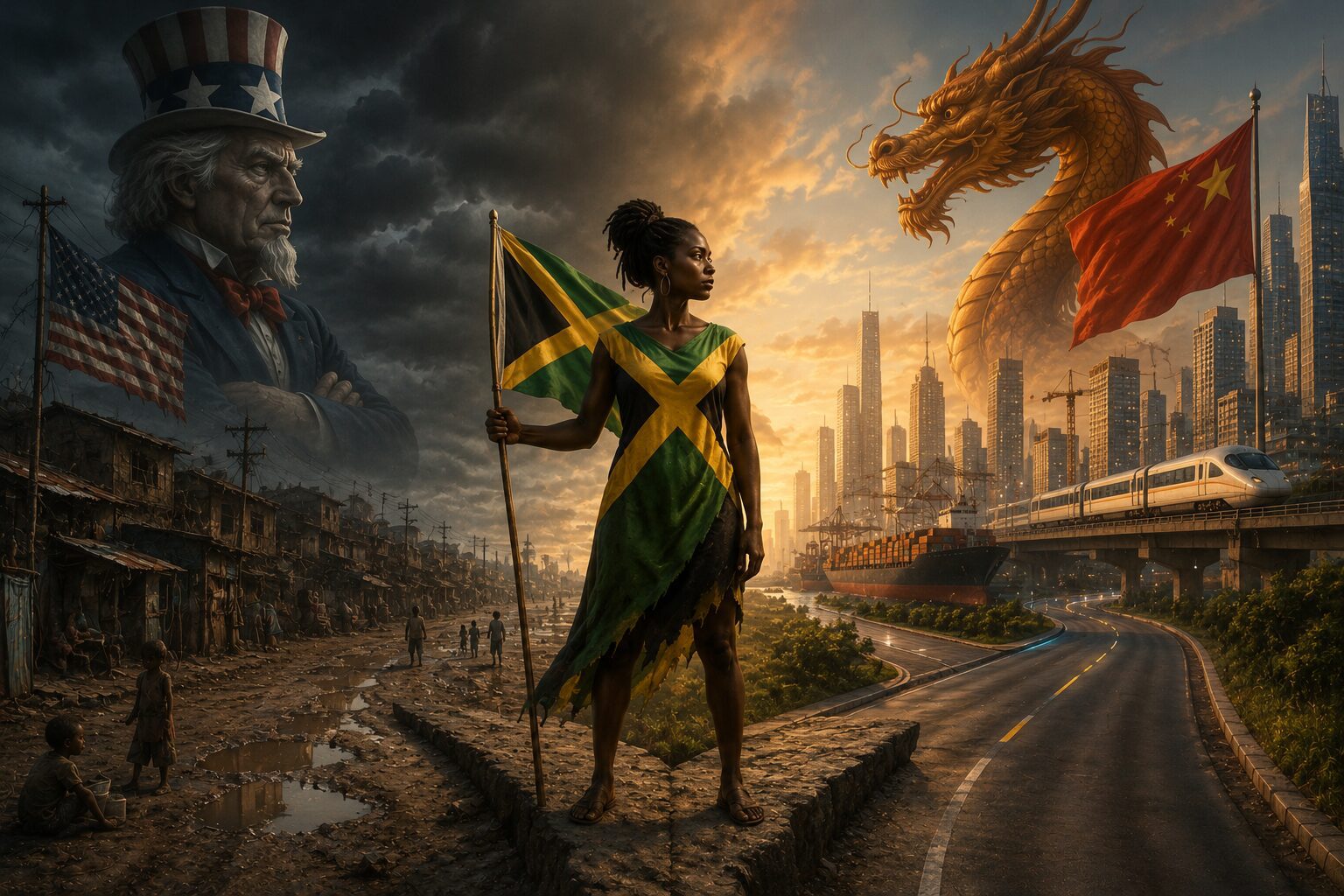
Today, Jamaica and many other formerly colonised nations are seeking alternative paths towards development, including through China’s Belt and Road Initiative. Chinese-backed projects and financing have contributed to infrastructure development across parts of the Global South, including roads, ports, hospitals, energy projects and other areas considered essential to economic growth.
Examples of Chinese-Backed Infrastructure in Jamaica:
Other infrastructure: Chinese financing and contractors have participated in Jamaican roads, bridges and other major public infrastructure projects.
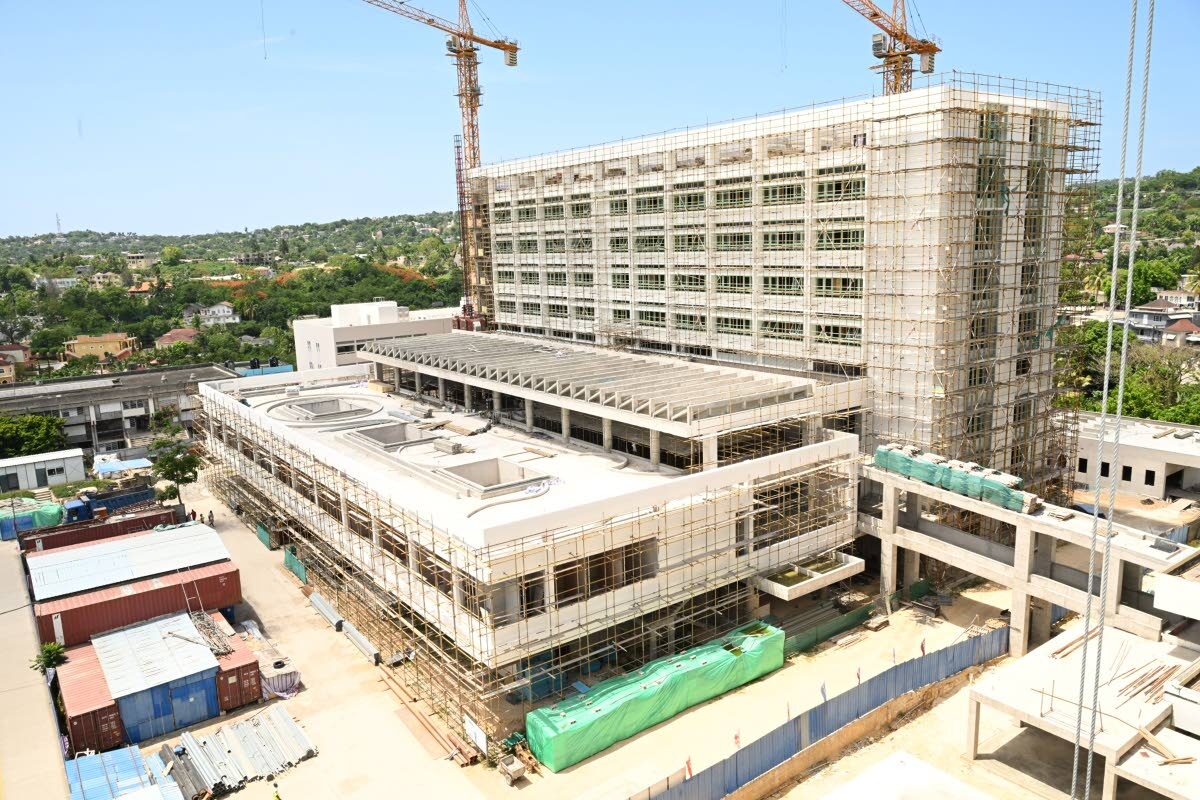
Western Children’s Hospital: Located in Montego Bay, this highly-publicized health project was funded via a major grant agreement from Beijing to construct the country’s first specialized pediatric and adolescent hospital in decades.
Ports and Maritime: Developing deep-water ports and shipping hubs to improve global supply chain connectivity.
Energy: Financing large-scale power plants, including hydropower, coal, and renewable energy grids.
Public Health and Facilities: Constructing regional hospitals, civic centers, and government office buildings.
North-South Highway: Approximately US$730 million, connecting Kingston and the north coast and significantly reducing travel time.
Southern Coastal Highway Improvement Project: Major rehabilitation and expansion of Jamaica’s southern road network.
Three Miles Interchange: Chinese-contracted flyover and road improvements at one of Kingston’s major traffic corridors.
Montego Bay Perimeter Road: China Harbour Engineering Company has been involved in construction of this major bypass project.
Through these partnerships, developing nations are pursuing the infrastructure, productive capacity and economic transformation that were denied to them under centuries of colonial domination. How Jamaica and other sovereign nations choose to develop, and with whom they choose to partner, is not for the West to decide.
Yet the United States has increasingly taken it upon itself to dictate who Jamaica should partner with, particularly as Jamaica strengthens economic ties with China. At the same time, Washington has offered no comparable alternative capable of meeting Jamaica’s enormous infrastructure and development needs. Jamaica cannot be told to reject partnerships that are helping to build roads, hospitals, energy systems and other critical infrastructure while being offered little in their place. As a sovereign nation, Jamaica must have the right to pursue relationships that advance its own development and serve the interests of the Jamaican people.
At the same time, a contradiction is becoming increasingly difficult to ignore. Anti-immigration politics have intensified across parts of the United States and Europe, particularly around migration from Africa, Latin America, the Caribbean and other developing regions. The message increasingly appears to be: we do not want Black and non-white people coming to our countries, but we are also uncomfortable when their countries pursue development through powers and institutions outside the traditional Western sphere of influence.
This is where Jamaica finds itself at a critical crossroads. If wealthy nations want less migration from the developing world, then genuine development in those countries should not be treated as a geopolitical threat. People are far more likely to build their futures at home when their countries can provide infrastructure, economic opportunity, security and a reasonable standard of living.
The United States frames its intervention around national security. However, one could argue that China’s emergence as a global power comparable to the United States and the wider West should not, in itself, be a deterrent to developing nations doing business with China. If Chinese partnerships provide infrastructure, investment and opportunities that countries such as Jamaica believe are necessary for their development, China’s growing global influence alone should not disqualify those partnerships.
This brings us back to the larger and more uncomfortable argument: why has Western global dominance historically been so closely intertwined with the economic dependency, underdevelopment and subordination of other nations? If the development of formerly colonised countries is viewed as threatening whenever it occurs outside Western control, then the issue is no longer simply security—it becomes a question of power, influence and who gets to determine the economic future of the developing world.
Bruce Golding Raises Similar Concerns
Former Jamaican Prime Minister Bruce Golding has recently echoed similar sentiments, delivering a sharp critique of the changing relationship between Jamaica, the Caribbean and the United States.
Speaking at the Team Jamaica Bickle Independence Gala in Philadelphia on August 1, 2026, Golding argued that Jamaica and other Caribbean states are being placed under severe pressure by an increasingly unilateral United States foreign policy. His intervention is particularly significant because Golding is not approaching the issue as an opponent of Jamaica’s traditional relationship with Washington. Rather, his argument raises a fundamental question about what friendship between sovereign nations is supposed to mean when one country possesses vastly greater economic and geopolitical power than the other.
Golding challenged Washington’s concerns over Jamaica’s relationship with China, pointing to the reality that Chinese investment has played an increasingly significant role in Jamaica’s development. This speaks directly to the contradiction Jamaica now faces: the United States warns Jamaica about doing business with China while failing to provide a comparable development alternative.
That contradiction goes to the heart of Jamaica’s present crossroads. A developing country cannot reasonably be expected to reject roads, infrastructure, investment, energy development and other opportunities simply because a competing global power views those relationships as a threat to its strategic interests.
Golding’s warning also illustrates the difficult position confronting small Caribbean states. Jamaica may be politically independent, but its deep economic connections to the United States through trade, tourism, remittances and migration create an enormous imbalance of power. That imbalance makes exercising sovereignty considerably more complicated when Washington’s geopolitical objectives conflict with Jamaica’s development interests.
This is precisely where the discussion about neocolonialism becomes relevant. Colonialism once exercised control directly through territory and government. Neocolonialism operates differently: political independence may exist while economic dependency and unequal power relationships continue to restrict the choices available to developing nations.
Jamaica therefore stands at a crossroads between neocolonialism and genuine development. The issue is not whether Jamaica should choose China over the United States. Jamaica should not have to choose. Jamaica has the sovereign right to pursue the partnerships necessary for its own development without being pressured to remain within a system that has historically kept developing nations economically dependent.
If Western nations are concerned about migration from the developing world, then they cannot simultaneously expect developing nations to remain economically stagnant or reject opportunities for development because those opportunities come from a geopolitical rival.
And if the West offers no comparable path to development, it cannot reasonably demand that Jamaica reject those who do.
Jamaica’s development cannot be determined by which global power feels threatened by it. It must be determined by what advances Jamaica, strengthens its economy, improves its infrastructure and provides a better future for the Jamaican people.