

A Revolution Without an Exit: Museveni’s Long Rule and Uganda’s Broken Vote
Jamaica Live International News– | Jan 18, 2026
When Yoweri Museveni seized power in 1986, he did not pretend that his rule would be temporary. He warned Ugandans plainly that he would govern for “a long time,” that there would be “no alternative arrangement” for the country, and that the revolution he led was “irreversible.” Those words, delivered at the dawn of his presidency, now read less like rhetoric and more like a governing doctrine—one that has shaped Uganda’s political reality for nearly four decades.
Today, that warning echoes loudly as Museveni has been declared the winner of yet another presidential election, extending his rule by five more years and pushing his time in power beyond 40 years. According to the electoral commission, Museveni secured 72 percent of the vote, compared with 25 percent for his closest challenger, Bobi Wine. Wine has rejected the outcome outright, condemning what he described as “fake results” and “ballot stuffing.”
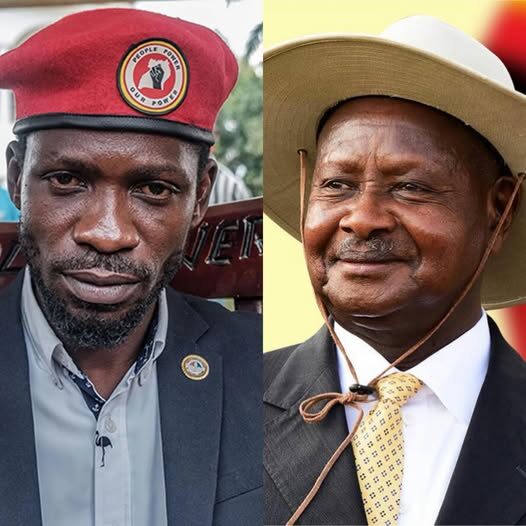
In recent days, videos circulating on social media appear to show electoral officials marking ballots in Museveni’s favour—footage that has further eroded confidence in an electoral process already widely criticised. The vote was marred by violence, intimidation, and the disabling of internet access across the country, a familiar tactic in contested elections under Museveni’s rule. Wine, a 43-year-old former pop star turned opposition figure, reported that he was placed under house arrest by government forces following the vote, even as authorities insisted he was “safe.”
A social media post by CNN, International Correspondent Larry Madowo highlighted a video circulating on social media that allegedly shows individuals marking ballots in the column in favour of President Yoweri Museveni. Madowo cautioned viewers that while the footage has raised serious concerns about the credibility of the electoral process, he was unable to independently verify whether the ballots shown in the video were ultimately added to Museveni’s official vote tally.
In a press release accompanied by a video message, Bobi Wine said the recording was made from a secure location after he was placed under house arrest by state forces. He alleged that his residence was raided with the assistance of a government helicopter, during which security personnel cut off electricity and seized his cameras. Wine said he and his family were forced to flee the home and are now hiding in an undisclosed location for their safety.
The human cost has been significant. Wine and his supporters say at least 21 people have been killed in election-related violence in recent days, while the authorities have confirmed seven deaths. Regardless of the disputed figures, the pattern is clear: elections in Uganda increasingly resemble security operations rather than democratic exercises.
Yet despite persistent allegations of human-rights abuses, media suppression, and electoral manipulation, Museveni has long remained a favoured—if uncomfortable—partner of Western governments. To Washington and its allies, he is a strongman who delivers strategic value. Uganda provides troops for regional military operations, including missions against al-Shabaab in Somalia, and hosts large refugee populations from neighbouring conflicts. These roles have made Museveni a crucial ally in regional security, often outweighing Western concerns about democracy and governance at home.
This contradiction sits at the heart of Uganda’s crisis. Publicly, Western governments issue statements urging restraint, transparency, and respect for democratic norms. Privately—and in practice—they continue to work with Museveni as an indispensable partner. The result is a long-standing political impunity: a leader who can suppress opposition, shut down the internet, and preside over violent elections while remaining firmly embedded in the international system.
Museveni, now 81, first came to power as a rebel leader promising stability after years of turmoil. Since then, he has won seven elections, each one more tightly controlled than the last. Constitutional term limits and age limits were removed along the way, ensuring that the “long time” he promised in 1986 would not be constrained by law.
The re-election of Moses Ali has further intensified concerns about the integrity and seriousness of Uganda’s political system under prolonged one-party dominance. At 86, Gen. Ali was returned to Parliament despite being visibly frail, physically incapacitated, and unable to walk without assistance. During the nomination process, he was presented from inside a vehicle, unable to stand, and struggled to speak coherently—scenes that circulated widely and alarmed observers. Critics argue that his public appearances raised profound questions about mental and psychological fitness for office, yet the ruling National Resistance Movement proceeded regardless.
Rather than reflecting the will of an engaged electorate, Ali’s victory—secured amid a tightly controlled political environment—has been cited as evidence of a system that prioritises loyalty to power over competence, accountability, or the basic capacity to govern. Coming alongside President Yoweri Museveni’s latest electoral win, Ali’s re-election underscores how Uganda’s political order increasingly resembles managed continuity, where age, infirmity, and incapacity are overlooked so long as allegiance to the ruling structure remains intact.
For many Ugandans, the latest election confirms what Museveni told them decades ago: that change would not come through the ballot box. The question now facing Uganda—and the international community that continues to legitimise its leadership—is whether a system built on an “irreversible revolution” can still plausibly be called a democracy, or whether it has finally settled into what it has long resembled: permanent rule by design.