

From “Illegal Immigrant” to MAGA Mouthpiece: Nicki Minaj’s Political Whiplash
Jamaica Live Entertainment Report – | Jan 21, 2026
The controversy surrounding Nicki Minaj and immigration has resurfaced, drawing attention to a series of public statements that appear, to some critics, to sit uncomfortably alongside one another. At the center of the debate are Minaj’s past expressions of empathy toward migrant children separated from their parents under U.S. immigration policies, and her later remarks about her own citizenship status and relationship with the United States.
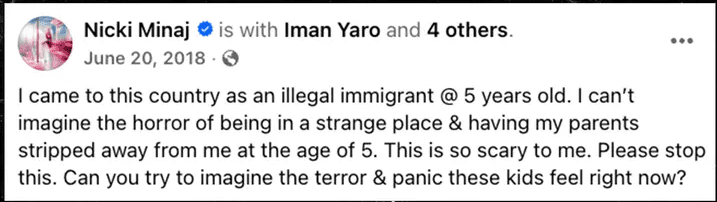
In 2018, during Donald Trump’s first term as president, Minaj, born Onika Tanya Maraj, took to social media to condemn the separation of migrant families at the U.S. southern border. “I came to this country as an illegal immigrant @ 5 years old. I can’t imagine the horror of being in a strange place & having my parents stripped away from me at the age of 5,” she wrote. Calling the situation “so scary,” Minaj urged an end to the policy and asked her followers to imagine the fear and panic experienced by detained children. The post was accompanied by a widely circulated image of children sleeping on mats inside a large cage—an image that became emblematic of the era’s immigration controversy. At the time, her comments were praised by many as a rare moment of moral clarity from a global pop star willing to challenge U.S. policy.
However, in 2024, Minaj reignited debate during a TikTok Live when she stated that she is not a U.S. citizen. “I was born on a beautiful island called Trinidad and Tobago. But I’ve been in the States for many years,” she said, adding pointedly that despite paying “millions of dollars” in taxes, she had not been granted any form of honorary citizenship. While the remark was delivered with her characteristic sarcasm, it raised eyebrows and prompted renewed scrutiny of her earlier claims about being an “illegal immigrant” as a child.
Critics argue that the apparent inconsistency—between identifying as an undocumented immigrant in 2018 and later emphasizing her long-term residency and financial contribution without citizenship—muddies an already complex issue. Supporters counter that Minaj’s comments reflect the often confusing and opaque nature of U.S. immigration status, particularly for children brought to the country at a young age, and that her core message in 2018 was one of empathy rather than legal precision.
The controversy also unfolds against the backdrop of Minaj’s broader public persona, which has increasingly blurred the lines between activism, provocation, and performance. Minaj’s political expression has shifted in tone and association since then, especially in 2025 and early 2026. Most notably:
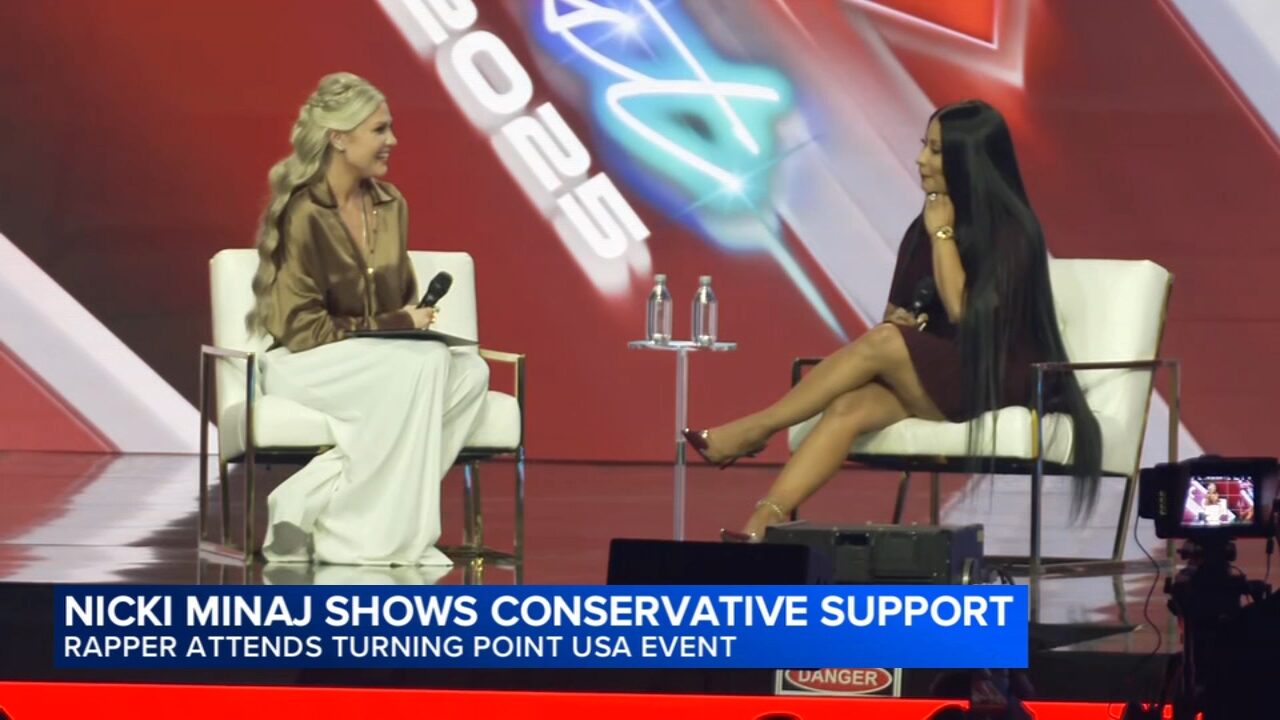
- She appeared onstage with Erika Kirk (widow of conservative activist Charlie Kirk) at AmericaFest 2025, where she praised President Donald Trump and Vice President JD Vance, saying Trump had given “so many people hope” and that his supporters were the “cool kids.” During that appearance she mocked California Governor Gavin Newsom by referring to him as “Gavin Newscum” — a derogatory nickname — after criticizing his handling of transgender issues involving children.
- Minaj has publicly framed many of her stances through the lens of Christian advocacy, speaking at a United Nations event about religious persecution — especially focusing on violence against Christians in Nigeria — and thanking Trump for highlighting these issues. She has said that defending religious freedom and Christianity is a cause worth her vocal support.
These developments have led many commentators and fans to describe her public political alignment as leaning toward current MAGA-aligned conservatism, a stark contrast to her earlier criticism of Trump’s immigration practices.
Feud With Don Lemon: Slurs and Legal Threats
In January 2026, tensions boiled over on social media between Minaj and journalist Don Lemon after he shared coverage of an immigration-related protest at Cities Church in St. Paul, Minnesota. Minaj responded with a series of posts on X (formerly Twitter), including an offensive slur directed at Lemon, demanding he be jailed and accusing him of disrespecting Christianity.
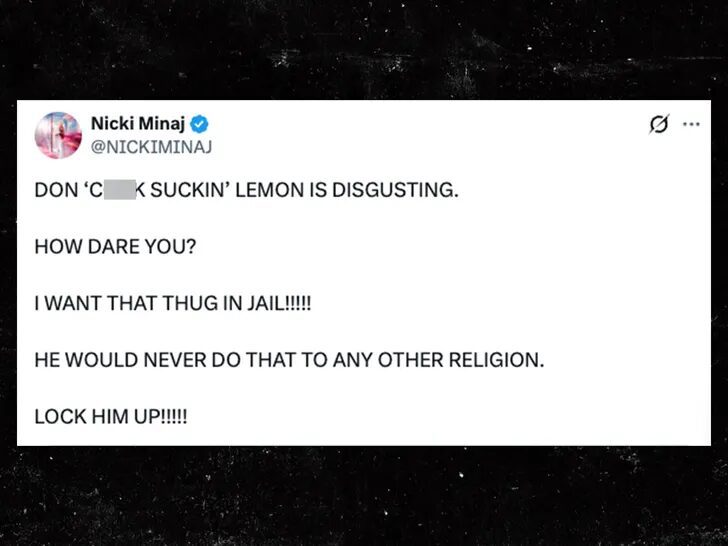
Lemon, who is openly gay, publicly slammed Minaj’s comments, calling her a “homophobic bigot” and criticizing her understanding of journalism — remarks that deepened the controversy. Minaj has defended her language, saying she “purposely” used inflammatory phrasing to draw attention to the issue she was addressing.
This feud comes amid a broader backlash, including online petitions demanding her deportation and strong reactions within the LGBTQ+ community, who say her rhetoric has crossed into harmful territory.
Christianity and Cultural Identity at the Center
Minaj’s outspoken embrace of Christian themes and claims of fighting for religious freedom have become core to her recent public identity. At conservative events and in public statements, she has emphasized her faith and the idea that Christian voices are under threat — a narrative that resonates with many conservative and religious-right audiences. This framing also intersects closely with MAGA messaging about religious liberty and cultural values.
Fanbase Fracture and Cultural Debate
These shifts have created a noticeable fissure within Minaj’s fanbase. Many longtime supporters — particularly LGBTQ+ fans and progressive listeners — say they feel alienated by her political realignment, while a new segment of followers embraces her willingness to speak boldly on issues of religion and national identity.
The controversy around Nicki Minaj in 2026 is more than a celebrity social media spat — it reflects larger cultural debates over immigration, religion, identity, and the role of artists in political discourse. Whether celebrated or condemned, her voice continues to provoke strong reaction and spark national conversation.