

Machado’s Regional ‘Liberation’ Rhetoric Raises Sovereignty and Stability Concerns
Jamaica Live International News– | Jan 21, 2026
María Corina Machado, a Nobel Peace Prize laureate and leading Venezuelan political figure, has ignited international controversy after publicly linking Venezuela’s recent U.S.-backed regime change to a broader vision that includes Cuba and Nicaragua, statements critics warn could destabilise the entire region.
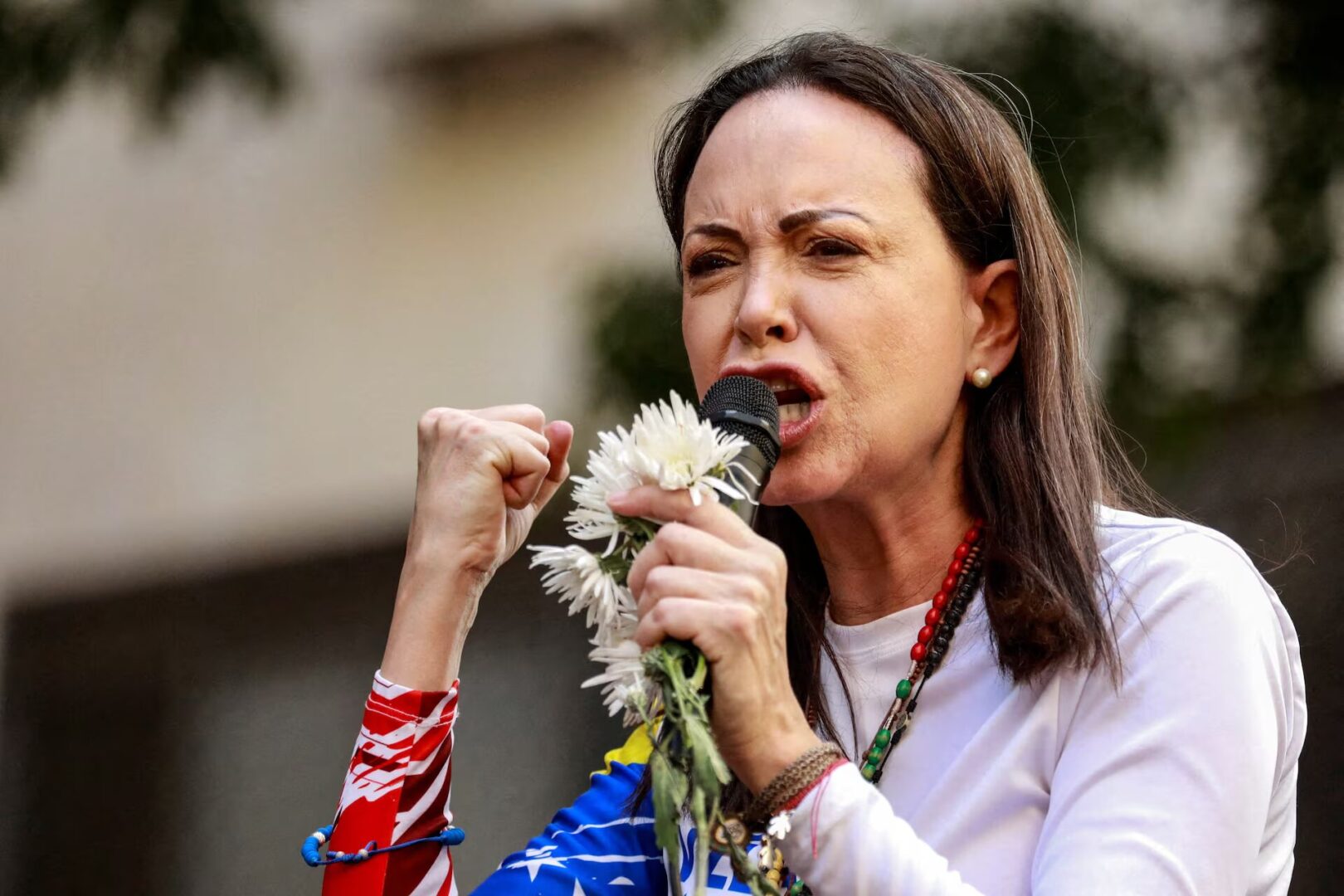
Speaking in a televised interview on Fox News, Machado declared, “Venezuela will be free. And once we liberate Venezuela, we will keep working and we will have a free Cuba and a free Nicaragua.” The remarks were made in the context of a direct United States military intervention in Venezuela, which resulted in the removal of the sitting government and placed the country under effective U.S. direction.
Redefining “Freedom” Through Military Force
In this context, Venezuela’s so-called “freedom” is not defined by a constitutional transition, popular referendum, or internationally supervised democratic process. Instead, it reflects regime change achieved through foreign military intervention. By extending this logic to Cuba and Nicaragua, Machado is effectively endorsing the use of U.S. force or coercive action against sovereign states based on ideological opposition to their political systems.
Analysts argue that such framing collapses the distinction between internal democratic struggle and external military imposition, redefining “liberation” as an outcome delivered by Washington rather than by the populations of the affected countries.
Echoes of the Monroe Doctrine
Simply put, Machado’s position revives a modern interpretation of the Monroe Doctrine—the 19th-century U.S. policy asserting American dominance over the Western Hemisphere and historically used to justify intervention in Latin America and the Caribbean. While originally framed as a safeguard against European colonialism, the doctrine later became a rationale for U.S. occupations, coups, and regime changes across the region.
Her comments suggest support for a hemispheric intervention strategy in which the United States assumes authority to reshape governments it deems unacceptable, regardless of sovereignty or international law.
Risks to Regional Stability
Critics warn that normalising military-led regime change as a policy tool carries serious consequences. The Caribbean and Latin America are deeply interconnected through trade, migration, security, and diplomacy. Escalating U.S. military involvement in multiple countries risks triggering wider instability, retaliatory alliances, refugee flows, economic disruption, and prolonged conflict.
For small states in the Caribbean, including Jamaica, the precedent is especially troubling. A regional order where powerful nations openly pursue ideological regime change undermines long-standing principles of non-intervention and respect for sovereignty that have been central to Caribbean diplomacy.
A Peace Prize Under Scrutiny
The controversy is further intensified by Machado’s status as a Nobel Peace Prize laureate. Critics argue that advocating or legitimising military intervention against multiple sovereign states stands in sharp contrast to the spirit of peace, dialogue, and conflict resolution the prize is meant to represent.
While Machado has not publicly outlined specific military plans for Cuba or Nicaragua, her language positions U.S. power as the primary vehicle for political transformation in the region—an approach that many see as incompatible with international norms and regional stability.
A Dangerous Precedent
As debate continues, one issue remains clear: redefining “freedom” as the product of foreign military intervention sets a dangerous precedent. Extending that model beyond Venezuela risks plunging the wider Caribbean and Latin American region into a new era of instability, confrontation, and great-power politics—an outcome that could reverberate far beyond the countries directly targeted.
For the region, the question is no longer rhetorical: if regime change by force becomes acceptable policy, no nation can assume it is immune.