

JLP MP Everald Warmington Sparks National Debate Over NHT Funds for Churches After Hurricane Melissa
Jamaica Live News Desk– | Jan 15, 2026
A new political and moral debate is rippling through Jamaica as Jamaica Labour Party (JLP) Member of Parliament Everald Warmington questions the government’s decision to allow the National Housing Trust (NHT) to provide post–Hurricane Melissa assistance to churches, arguing that the move is unfair to contributors and risks blurring the line between church and state.
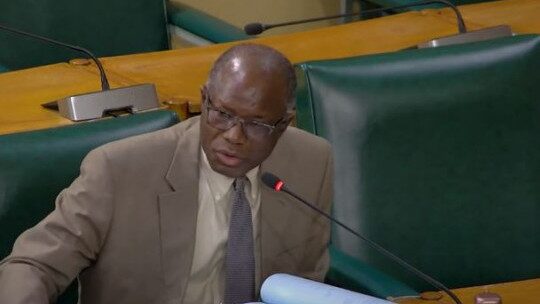
At the centre of the controversy is a J$75 million allocation announced as part of the Government’s hurricane response package, which includes support to faith-based organisations that were damaged or displaced by Hurricane Melissa. While the Government sees churches as vital pillars in community recovery, Warmington believes the policy sets a dangerous precedent.
Warmington: “The NHT is for Contributors — Not Churches”
Warmington’s primary argument is rooted in the legal and financial mandate of the National Housing Trust.
“The NHT was established to serve its contributors — Jamaican workers who pay into the fund so they can access housing solutions,” he argues. “Many churches do not contribute a cent to the NHT, yet now they are being positioned to benefit from it. That is not what the Trust was designed for.”
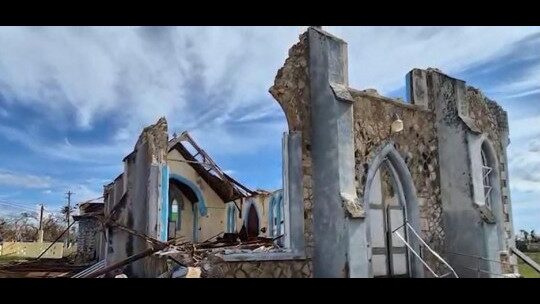
He also raised constitutional and ethical concerns about the state using public resources to rebuild religious institutions.
“In a secular democracy, the Government should not be rebuilding churches,” Warmington said in remarks that quickly drew backlash. “These are religious bodies. They own land, buildings, and in many cases significant assets. They should go to commercial banks or use their own reserves, just like any other organisation.”
Warmington further suggested that in a country where tens of thousands of families lost roofs and homes, government funds should be prioritised for displaced citizens rather than church buildings. He even floated the idea that smaller churches should consider merging rather than maintaining multiple damaged structures.
Holness Pushes Back: Churches Are on the Frontline
Prime Minister Andrew Holness moved swiftly to clarify the Government’s position, pushing back against the idea that public funds were simply being used to rebuild religious sanctuaries.
According to Holness, the J$75 million is not exclusively for reconstruction but is intended for clean-up, relief, and community-based recovery support.
“Churches are not just places of worship,” the Prime Minister said. “They are feeding centres, shelters, counselling hubs, and distribution points for aid. In Hurricane Melissa, many of the first places people turned to were their churches.”
Holness stressed that the Government was supporting the function churches perform in national recovery — not their theology.
Clergy Fire Back
Church leaders have reacted strongly to Warmington’s statements, accusing him of misunderstanding the role churches play in Jamaican society.
Across the island, churches were among the first institutions to open their doors after Hurricane Melissa — hosting displaced families, distributing food, offering trauma counselling, and coordinating volunteer relief teams.
“To suggest that churches are just private religious clubs is to ignore reality,” one senior cleric told Jamaica Live. “When disaster strikes, it is often the church that fills the gap long before any agency arrives.”
Some religious leaders also noted that many churches operate schools, clinics, and community centres, blurring the neat separation Warmington is trying to enforce.
A Fairness Question That Won’t Go Away
Still, even among supporters of church aid, questions remain.
Some Jamaicans are asking whether it is fair for institutions that do not pay into the NHT to access its resources — while contributors struggle to get housing solutions of their own. Others have suggested that if churches do take public funds, they should be required to prioritise rebuilding schools, shelters, or community facilities rather than sanctuaries.
At the same time, critics of Warmington say his stance risks weakening the very institutions that often carry the social burden when the state is stretched thin.
A Deeper Tension in Jamaican Society
What this controversy has exposed is a deeper tension in Jamaica’s social contract.
On one side is the argument for strict financial and constitutional discipline: public money, especially contributor-based funds like the NHT, should not be used for institutions outside their mandate. On the other is a practical reality: churches are among the most effective and trusted disaster-response partners Jamaica has.
As Hurricane Melissa recovery continues, the question remains unresolved:
Should the state treat churches like any other private organisation — or acknowledge them as a unique pillar of Jamaica’s social safety net?
For now, Everald Warmington has forced the country to confront a conversation it has long avoided — and it is one that isn’t going away anytime soon. 🇯🇲