

Frozen Gold Rush: Billionaires, Trump, and the Battle for Greenland
Jamaica Live International News– | Jan 14, 2026
In a stunning escalation of geopolitics and presidential brinkmanship, President Donald Trump has openly threatened to risk war with NATO allies in pursuit of a prize that is both strategic and symbolic: Greenland — the massive Arctic island belonging to Denmark. What has been dismissed as vanity or political spectacle has now morphed into a dangerous policy pursuit with real risks for global alliances, local sovereignty, and a select group of the world’s richest men.
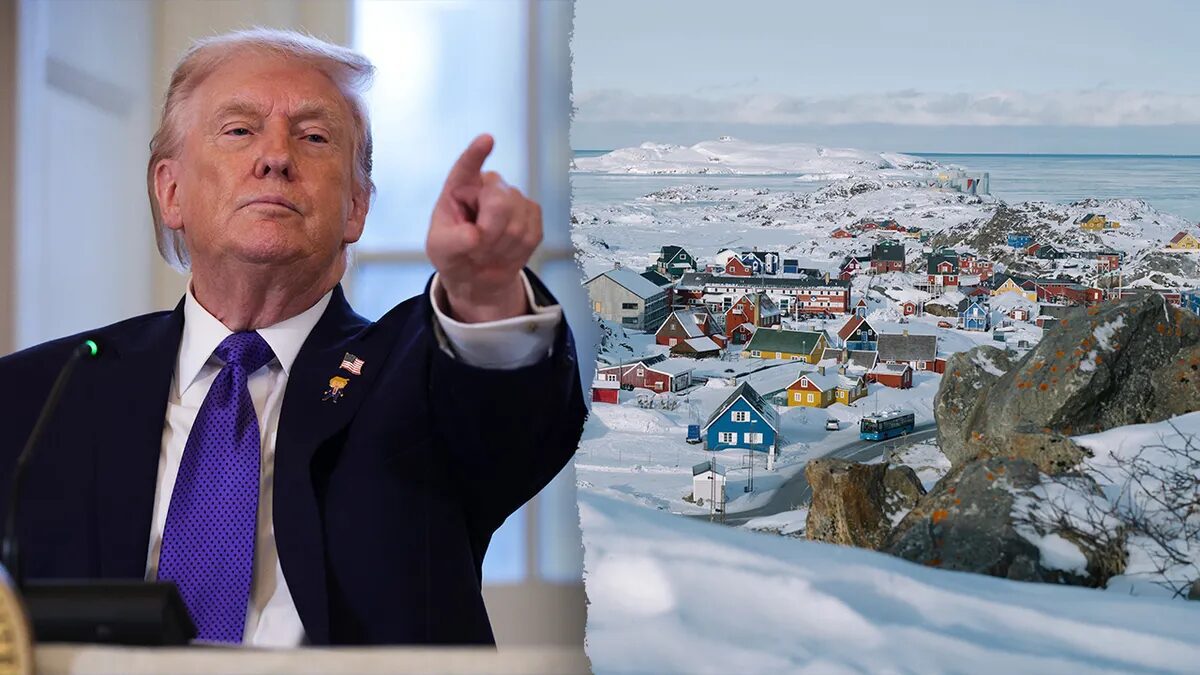
Trump’s rhetoric — that the United States will have Greenland “one way or the other” — includes the unthinkable: the possibility of military force to seize territory from a fellow NATO member. Denmark and Greenland have repeatedly condemned the idea. NATO officials have warned that unilateral U.S. actions could fracture the alliance built since World War II. European Union leaders have echoed that sentiment, saying any military move would violate foundational commitments and destabilize the Western alliance.
“Greenland cannot under any circumstances accept a U.S. takeover,” Greenland’s government said as diplomatic tensions spiked in early January 2026.
But behind the bluster on the world stage lies a constellation of financial interests, strategic market positioning, and political payoff — all reinforcing Trump’s fixation on the Arctic.
The Billionaire Beneficiaries: Africa to AI CEOs
While the public narrative pushes security and sovereignty, media and financial analyses are increasingly linking Trump’s Greenland push to the interests of tech heavyweights and venture capitalists who stand to benefit enormously if Greenland’s mineral potential is unlocked under U.S. control.
KoBold Metals: Mining AI for Minerals
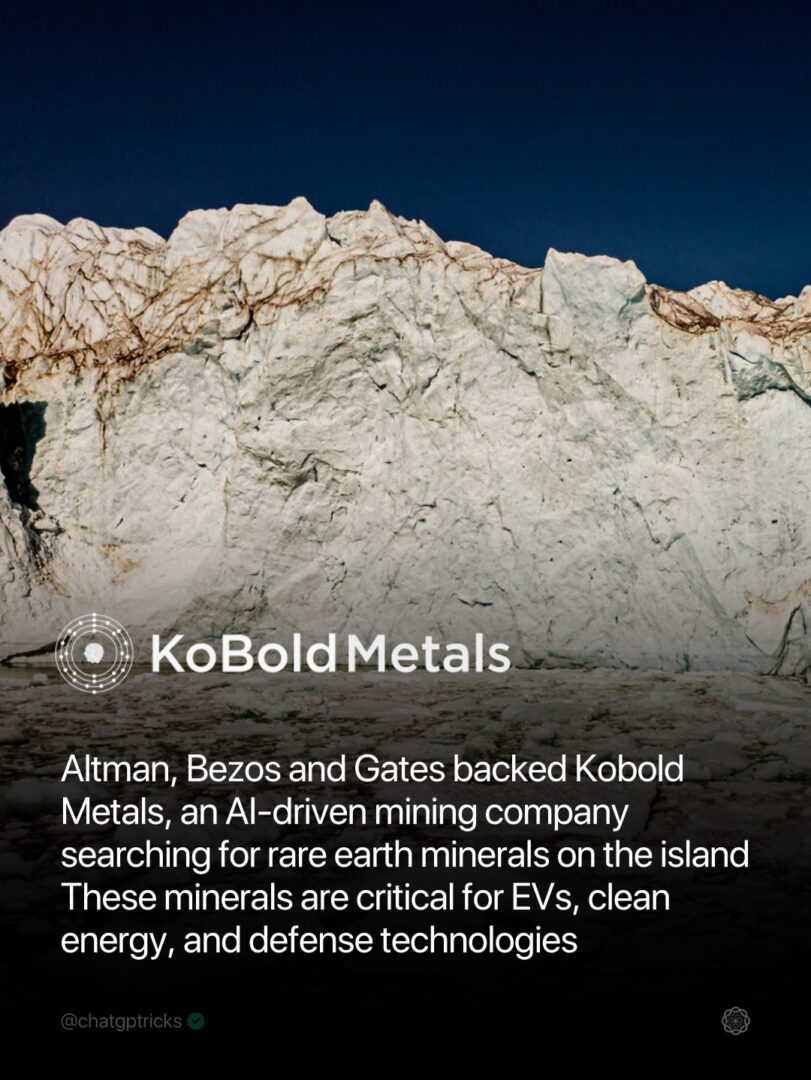
At the heart of the mineral speculation is KoBold Metals — a startup that uses artificial intelligence and machine learning to seek out critical minerals beneath the Greenland ice sheet. These materials — cobalt, nickel, rare earths, and copper — are essential for technologies like electric vehicles, renewable energy, and advanced semiconductors.
Top investors in KoBold include a veritable who’s who of global wealth:
- Jeff Bezos (Amazon founder)
- Bill Gates (Microsoft co-founder)
- Michael Bloomberg (Bloomberg founder)
- Sam Altman (OpenAI CEO)
- Mark Zuckerberg (Meta CEO)
- Andreessen Horowitz (leading venture capital firm)
These figures have collectively poured hundreds of millions — some reports suggest well over $1 billion — into KoBold’s AI-powered exploration efforts.
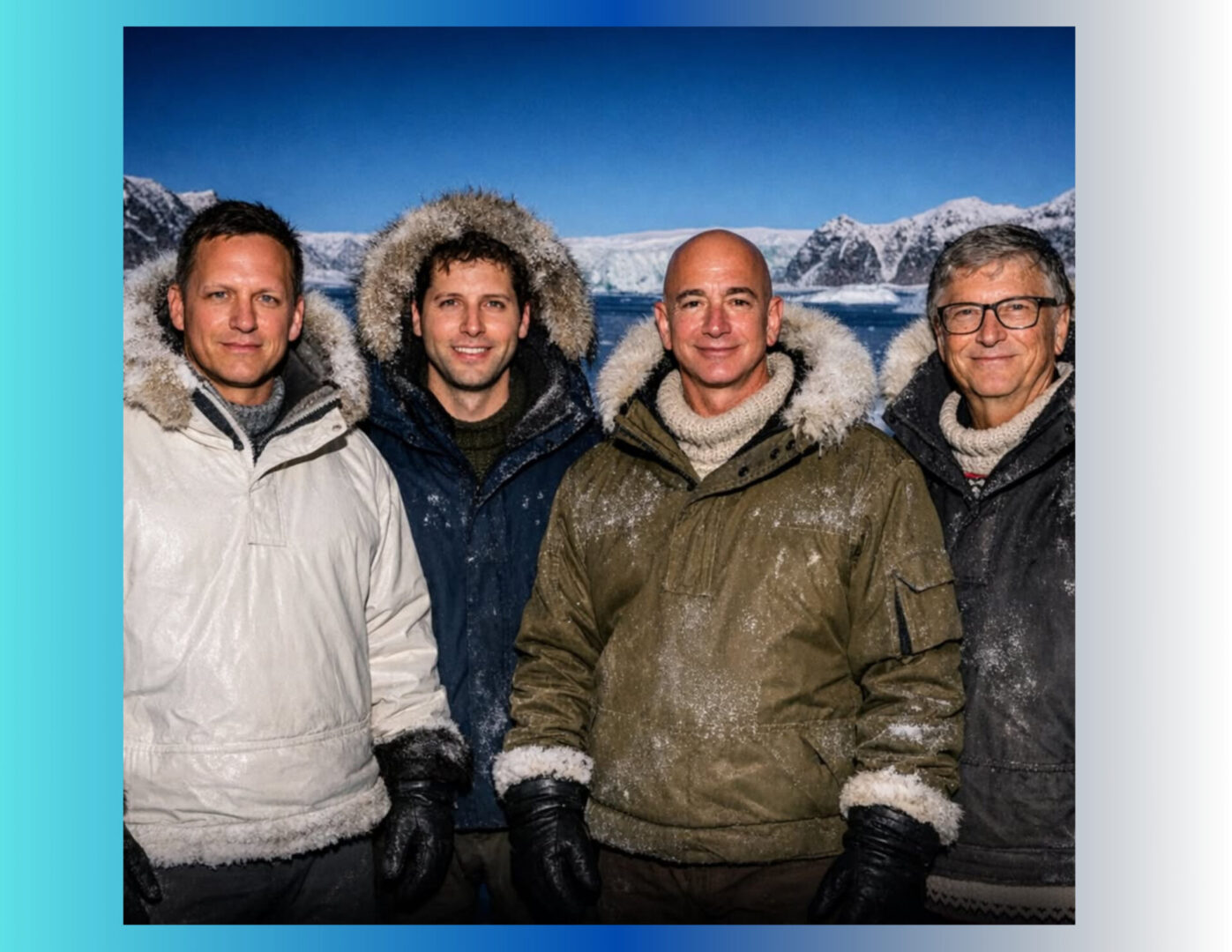
This isn’t a charity bet on science: rare earth elements and battery metals are among the most strategically valuable resources on the planet because they underpin modern technology, defense systems, renewable energy systems, and artificial intelligence infrastructure.
Praxis and the “Freedom City” Dream
Beyond mining lies a more surreal vision: a private, technologically operated city on Greenland.
Praxis — a startup funded by libertarian investor Peter Thiel (PayPal co-founder) and linked socially to Trump allies — has propagated ideas of transforming parts of Greenland into what it calls a “freedom city.” Critics have dismissed this as techno-utopian colonialism.
This vision dovetails with Trump’s ambitions and the larger narrative of placing U.S. interests — and U.S. capital — physically onto Greenland’s frozen landscape.
Critical Metals Corp and the “Magnificent Seven” Link
Another piece of the puzzle is Critical Metals Corp, a firm developing rare earth extraction projects in Greenland. Its CEO Howard Lutnick — former head of Cantor Fitzgerald — has close ties to Trump administration leadership.
Critically, institutional investors that back Critical Metals have also amassed shares in Trump Media, raising questions about circular investment incentives tied to political outcomes.
Stocks tied to Greenland’s mineral prospects — such as Critical Metals Corp and Greenland-linked banks — have soared on mere speculation of a U.S. acquisition, drawing comparisons to meme-stock rallies and feeding profit-driven narratives around geopolitical conflict.
Politics and Donations: A Closed Loop of Influence
Perhaps the most explosive reality beneath the surface is the political economy binding Trump and his billionaire donors. Investigations suggest that many of the same tech and finance giants investing in Greenland-oriented ventures have also been significant contributors to Trump’s 2024 campaign and associated political vehicles.
One Guardian investigation reported that donors and investors aligned with Trump collectively contributed over $240 million to his campaign, and institutional backers purchased hundreds of millions in Trump Media stock ahead of the election.
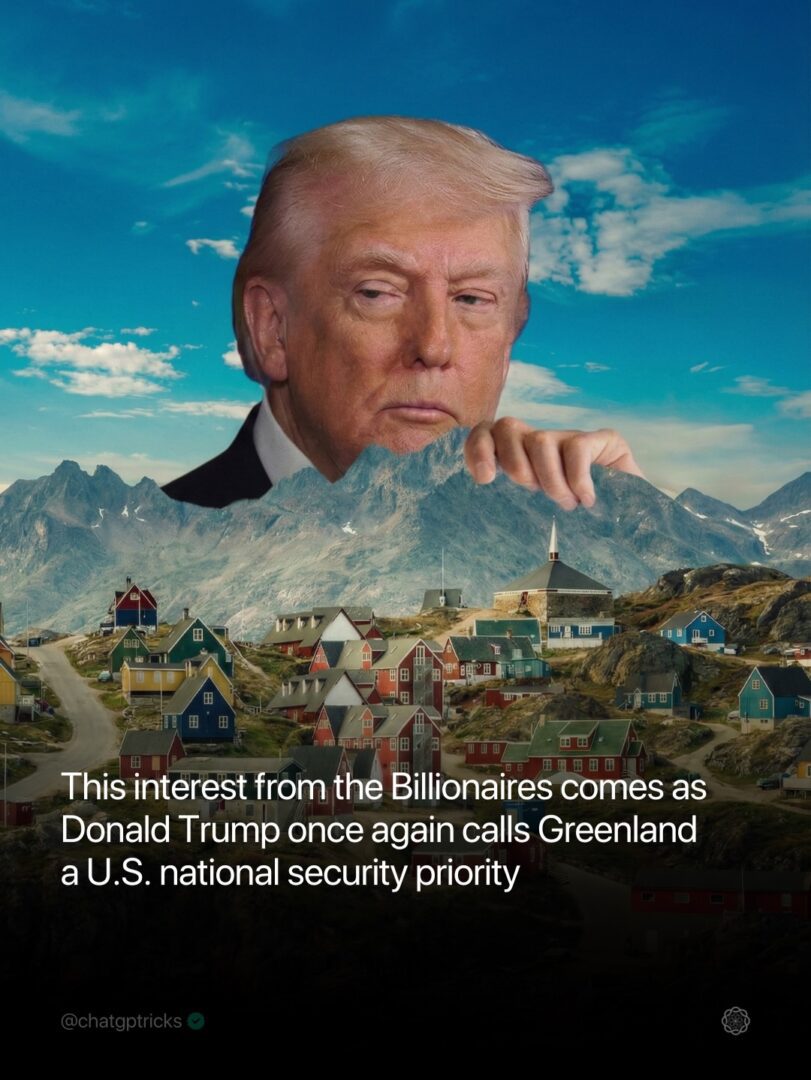
This creates what critics have labeled a “circle of grift”:
• Billionaires give money to Trump;
• Trump pursues policy that boosts their potential returns;
• Speculators and investors benefit if Greenland’s resources are developed under U.S. control.
Whether or not these donations were made with explicit expectation of policy outcomes, financial analysts and watchdog groups argue that the alignment of political pressure with billionaire interests is too close to be coincidence.
Sovereignty, Resistance, and Rising Tensions
While Trump rattles sabers, Greenlanders and Danish officials have made clear that there will be no sale, and no occupation. Denmark insists that Greenland’s status as an autonomous territory cannot be overridden by force.
Denmark’s Foreign Minister Lars Løkke Rasmussen said Wednesday that Copenhagen and Washington remain sharply divided over the future of Greenland, even after high-level talks in Washington.
Following meetings with U.S. Vice President JD Vance and Secretary of State Marco Rubio at the White House, Rasmussen said Denmark and Greenland had agreed with the United States to establish a senior working group to continue discussions.
“We have a fundamental disagreement,” Rasmussen said, adding that the group will seek a possible path forward that addresses U.S. security concerns while still respecting what he called Denmark’s “red lines” over Greenland’s sovereignty.
President Donald Trump has repeatedly stated that he wants the United States to acquire Greenland, which is a semi-autonomous territory within the Kingdom of Denmark. He reiterated that position again on Wednesday, arguing that control of Greenland is critical to U.S. national security and to what he described as the “Golden Dome” defense system, and said NATO should be involved in securing the island.
Still, the mere suggestion of unilateral U.S. action has provoked frank anxiety among Greenland’s communities, with some residents contemplating leaving the island and others doubling down on independence movements fueled by resentment toward U.S. pressure.
Internationally, NATO allies and EU partners have warned that a forceful attempt to seize Greenland would shatter the transatlantic alliance, undermine global norms, and create strategic chaos in a region already under pressure from Russian and Chinese Arctic ambitions.
Germany, Sweden, and Norway have collectively decided are sending military personnel to Greenland.
Cold Ice, Hot Money, and a Fractured World
The Greenland saga encapsulates a convergence of geo-strategic ambition, billionaire investment strategy, and political influence that some critics are calling the most brazen example of modern geopolitical rent-seeking in decades.
Trump’s Arctic gambit is not just about territory — it’s about who owns the future:
- Who controls the minerals that power the next generation of tech?
- Who dictates the rules of resource extraction in fragile ecosystems?
- And who profits if Greenland becomes a canvas for economic expansion underwritten by political pressure?
Beneath the frozen surface lies more than rock and ice — it lies the tangled interests of wealth, power, and influence in the 21st century.
Key Facts Summary
- Trump has openly threatened military force to acquire Greenland, despite NATO and Danish opposition.
- Tech billionaires and major investors have significant stakes in companies exploring Greenland’s rare earth minerals — including KoBold Metals, Critical Metals Corp, and libertarian projects like Praxis.
- These investors include Jeff Bezos, Bill Gates, Michael Bloomberg, Sam Altman, Mark Zuckerberg, and Peter Thiel.
- Greenland’s stock prices for related assets have surged amid speculation of U.S. intervention.
- Critics warn that political donations and investment incentives may be shaping U.S. policy motives, blurring lines between public interest and private gain.